The Story
Why it exists.
The beginning
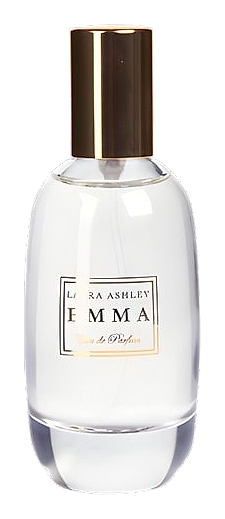
Emma arrives from Laura Ashley, a house long associated with English country-house sensibility, floral prints, and a particular strain of romantic domesticity that has migrated naturally from interiors into fragrance. The composition draws its inspiration from Jane Austen's most generous heroine, the matchmaker who knows everyone else's heart before sorting her own. The brief asked for something that captured Austen's particular sweetness: not sharp satire but warm observation, the kind of intelligence that arrives in a garden with a basket of fresh-picked fruit and stays for cake. Composed by Azzi Glasser, a perfumer known for building fragrances that wear like atmosphere rather than statement, Emma works in a register that sits comfortably between skin scent and something more composed.
The unusual move here is the interplay between green notes and a bouquet built around neroli, gardenia, and white rose. Green notes in perfumery can read as sharp, almost bitter, the snap of a freshly cut stem, and they carry a certain forest-floor depth that anchors more delicate materials. Set against jasmine, mandarin orange, and ylang-ylang, those greens keep the composition from collapsing into pure white-floral haze. The neroli brings a bright, slightly honeyed lift, while the gardenia adds that creamy, almost waxy lushness that makes the whole thing feel generous rather than austere.
The evolution
On first spray, the mandarin orange and neroli arrive together, a bright citrus and soft floral lift that opens the composition with a certain freshness, the kind of entry that feels like stepping through an open window. The jasmine threads in early, adding a warm, slightly indolic sweetness that gives the opening an immediate sense of depth. The green notes hold the whole thing upright, keeping the citrus from feeling too sharp and the floral from feeling too heavy. Within the first few minutes, the gardenia blooms fully, and the white rose and pansy start to soften the edges, rounding out the composition into something more creamy and romantic. The ylang-ylang adds a tropical, almost banana-like richness that deepens the floral heart, and as the top notes begin to recede, the fragrance settles into its middle act, a generous, layered floral that feels both composed and lived-in.
Cultural impact
Emma wears its literary reference lightly, which is part of its charm. Rather than spelling the connection out, it lets the wearer draw the line between Jane Austen's generous-hearted matchmaker and the composition itself, a fragrance that feels welcoming, observant, and quietly sure of itself. It reads as a scent for someone drawn to softness without sentimentality, the kind of person who would rather evoke a mood than announce a statement. The fragrance sits comfortably in the floral-romantic category, and its green notes and oud-anchored base give it just enough gravity to keep it from drifting into pure prettiness.