
The Story
Why it exists.
The beginning
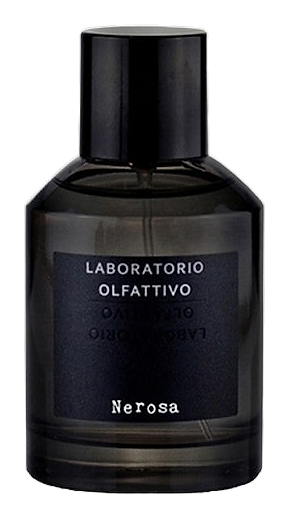
Nerosa was composed by David Maruitte in 2011. The formula sat dormant for eight years, Roberto Drago and his team at Laboratorio Olfattivo decided the house wasn't ready for a fragrance this assertive. Today that caution looks like prescience. The Black Collection demands work with genuine intensity, compositions that earn their place through conviction rather than consensus. Nerosa arrived in 2019 with the confidence of something that had already survived the waiting.
What makes Nerosa unusual is the structural logic: the rose doesn't soften the oud, it argues with it. Geranium and ylang-ylang add green and tropical brightness that keeps the floral from going quiet, while birch and castoreum introduce a slight mineral tension beneath the warmth. This isn't a rose built for comfort. It's a rose built to be heard, which is precisely why it works.
The evolution
The first minutes belong to saffron, metallic, bright, a little aggressive. The brand calls it sublime and they mean it. Nutmeg and clove arrive as warmth beneath, guaiac wood and labdanum adding an aromatic resinous quality. Within an hour, the rose takes over. Not gently. It dominates. Behind it, the oud and leather form a dark anchor that keeps the floral from becoming decorative. The drydown continues for hours: the rose merges with the base until both become one, animalic, smoky, warm. By the time the leather darkens and the oud deepens, this fragrance has stopped pretending to be polite. That's the payoff. That's when it becomes yours.
Cultural impact
The saffron-rose-oud combination draws strong reactions, people either lean in or step back. It's not a fragrance designed to please everyone, which is precisely why those who love it, love it completely. Saffron introduces a sharp, medicinal edge that cuts through the sweetness of rose, while oud adds a dark, resinous backbone that keeps everything grounded. The result is a fragrance where the notes argue rather than complement, creating a tension that feels modern and intentional. As the scent develops on skin, the initial punch of spice softens into something quieter and more contemplative, though the oud remains present throughout.
The House
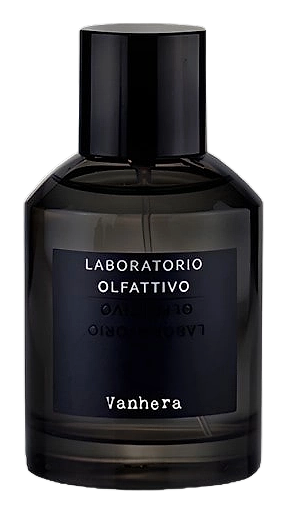
Laboratorio OlfattivoLaboratorio Olfattivo is an independent Italian niche house founded in Rome in 2009 by creative director Roberto Drago and business partner Daniela Caon. The house operates as a creative platform, collaborating with perfume craftsmen who work autonomously under the Laboratorio Olfattivo name rather than operating through an in-house perfumer. Each fragrance exists as its own standalone work, not part of a numbered collection. The house is recognizable by a characteristic dark amber, vetiver, and resin signature anchored by a consistent base structure across releases. Arancia Rossa stands out as a vivid, saturated blood-orange perfume built over that warm amber-vetiver foundation. The catalog spans orientals with deep burnished woods and resins alongside brighter citrus compositions. The output is deliberately unhurried, with one to three new fragrances arriving most years, and the two founders remain the sole creative force behind the label. Roberto's family background runs through the Italian perfume trade, reportedly through his father Luigi Drago's work running a perfume distribution house. By contrast, Laboratorio Olfattivo itself has never sought outside investment, remaining entirely founder-owned and operated. The self-funded structure means完全没有外部资金压力,创意方向不受投资者期望驱动。This shape shifting has translated into a genuine point of view that longtime followers recognize in the catalog. The founding story holds particular interest within the niche fragrance community because the label avoids the conventional channels of beauty entrepreneurism. There is no private label background, no pivot from cosmetics, and no celebrity angle. Instead, a distribution professional and a marketing executive with a shared passion built something from scratch in Rome and held to it for over a decade. The name Laboratorio Olfattivo translates roughly to olfactory laboratory. It signals that the house is understood as a working studio for assembling aromatic materials rather than a heritage brand performing its own mythology. The founder-driven ethos has also meant that the house has remained genuinely small in team size, operating with a long-term perspective rather than chasing market relevance. Every creative decision filters through the two founders, contributing to a catalog that feels internally motivated rather than assembled by committee.
The Creator
David MaruitteMaruitte favors a clean, linear architecture that lets key ingredients shine. He reaches for synthetics such as Ambrocenide to add a crisp, green edge, then layers natural extracts that echo the same motif.