The Story
Why it exists.
The beginning
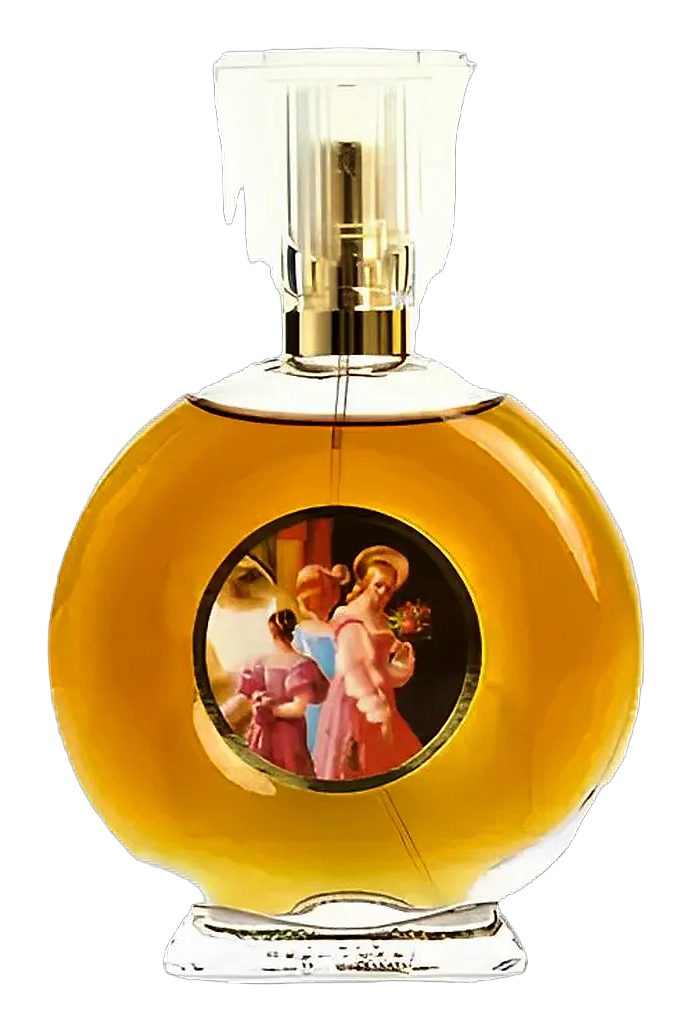
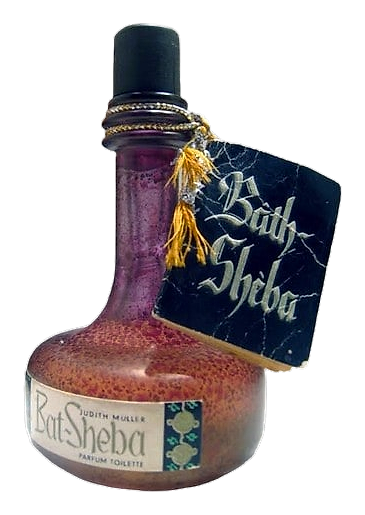
Bat-Sheba is named for the biblical figure, a woman whose story carries beauty, desire, and consequences. That framing was deliberate. The 1964 launch from Judith Muller, a Hungarian-born Israeli perfumer, wasn't playing it safe. She gave the fragrance a name with weight and let the composition carry it. Sophia Grojsman and Ernest Shiftan built this as a chypre that would hold its ground, aldehydes, heavy florals, leather, and castoreum all occupying the same sentence without apology. The result is a fragrance that doesn't ask whether you'll like it. It tells you what it is.
The structure is unusually confident for its era. Most chypres softened their animalics, tucked them beneath moss and resin where they'd whisper rather than speak. Bat-Sheba put the leather and castoreum on equal footing with the florals. The carnation isn't background spice; it's a central character. The aldehydes don't disappear after the opening, they persist, lifting the heavier base materials into something that stays luminous rather than simply deep. Grojsman's fingerprints are already visible here: that willingness to push a single material further than convention suggested, to let something controversial become the point rather than a footnote.
The evolution
The aldehydes open bright and metallic, rosewood giving them something warm to land on. Bergamot adds a brief citrus clarity before the florals take over, carnation leading, jasmine and rose providing weight. For the first two hours, this is a powdery, spice-forward floral with real presence. Then the hand-off happens. Leather arrives not as an undertone but as the undertone, saddle-warm, castoreum threading through it with that characteristic animalic depth. Patchouli darkens everything. Oakmoss grounds it in the chypre tradition. Vetiver keeps it cool at the edges. The aldehydes don't vanish, they persist beneath, lifting the heavy materials so the drydown stays luminous rather than simply deep. On fabric, this lasts eight to ten hours. On skin, the castoreum drydown clings closest where warmth concentrates, the neck, the inner wrist. The next morning, there's still something there: amber and leather, muted but present, like the ghost of the night before.
Cultural impact
Bat-Sheba is the kind of vintage chypre that surfaces on collector forums with a following that never quite fades. It has the aldehydic lift of mid-century classics, the animalic confidence of the pre-IFRA oakmoss era, and enough leather and castoreum to make it genuinely confrontational by modern standards. Those who connect with it tend to stay loyal.