
The Story
Why it exists.
The beginning
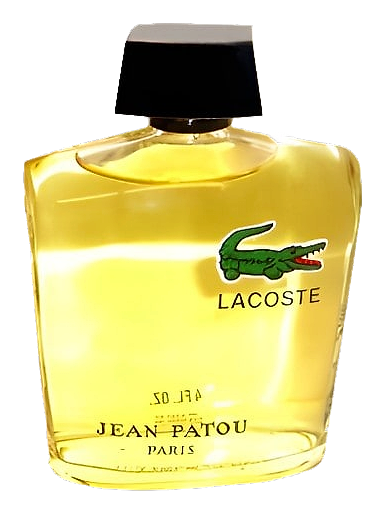
The name says tennis. The scent says something more. Lacoste arrived in 1967 as a collaboration between Jean Patou and the sportwear brand founded by René Lacoste, the tennis legend whose polo shirt redefined athletic clothing. Perfumer Jean Kerleo took the brief and ran with it. Sport translated into scent meant clean structure, no ornamentation, everything in its place. The result was a fragrance built on herbs and citrus that moved through spices into moss and ambergris, a drydown that actually delivered on its promises. This wasn't fragrance as formality. It was fragrance as movement, as life, as the scent of someone who showed up and played.
Seven top notes. That's unusual for 1967, when most compositions kept things simple. Kerleo loaded the opening with basil, rosemary, coriander, lavender, petitgrain, lemon, and bergamot, an herb garden and a citrus grove in the same breath. The trick is that none of them dominates. They work as an accord, creating a cool, green freshness that doesn't read as soapy or conventional. The heart adds carnation and cinnamon, a pairing that can register as either warmly spiced or faintly animalic depending on who's wearing it. Cedar and vetiver keep the structure grounded. The base, moss, ambergris, musk, tonka bean, vanilla, is where the fragrance earns its reputation.
The evolution
The first hour belongs to herbs. Basil and rosemary arrive crisp, almost medicinal, before bergamot rounds the edges. Petitgrain adds a bitter citrus twist. The lavender keeps everything grounded, no float, no sweetness, just clean green structure. Around the 30-minute mark, the hand-off begins. The citrus fades and carnation emerges, bringing warmth with it. Cinnamon follows close behind. The spices don't overpower; they deepen. Cedar and vetiver appear as texture now, not notes, the dry wood of a court bench in autumn. Two hours in, the moss takes over. Ambergris adds salt and animalic weight that balances the sweetness of tonka bean. Vanilla lingers in the background, soft and warm. The composition settles into a dense, velvety drydown that rewards patience.
Cultural impact
Discontinued and increasingly rare, Lacoste has become an olfactory cult star among vintage collectors, adored, sought after, and expensive. One reviewer put it plainly: this fragrance has everything the modern Lacoste scents lack, namely class, style, and charisma. The carnation-spice-moss combination sits outside mainstream taste in a way that actually works in its favor. It occupies a territory most contemporary houses have abandoned, favoring warmth and character over predictability. For those who've tracked it down, the consensus is clear: this is the Lacoste fragrance worth wearing.