The Story
Why it exists.
The beginning
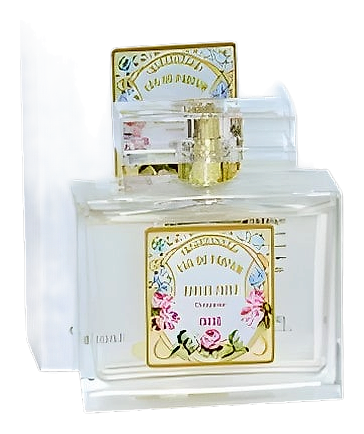
Rubis sits within an Honoré Payan catalog that treats single materials as recurring characters, patchouli threaded through several expressions, jasmine given its own soliflore, vanilla explored in depth. Rubis is the line's oriental turn: a composition built on the quiet luxury of almond and white florals rather than the bold strokes of spice or smoke. Its name translates to ruby, gesturing toward something warm and gem-toned, a red light in a window. The fragrance carries the particular confidence of a perfumery rooted in the Provençal raw materials tradition, a house whose relationship with Grasse runs deep enough that it no longer needs to prove anything to anyone. There's almond from the opening note, a kernel-sweet warmth, almost edible, sharpened by the herbal cool of caraway.
What shapes Rubis in the Honoré Payan catalog is its structural choice: the almond-topped oriental. Most orientals of this lineage lean on resins, amber, or heavy spice. Rubis opens with bitter almond and caraway instead, giving the entry a gourmand softness uncommon in the genre, before pivoting to jasmine and tuberose for a floral heart that prevents the composition from tipping into pure confection. The woody base anchors it back to earth, sandalwood and a quiet hint of cedar that keeps the white florals from drifting away into sheer sweetness.
The evolution
The opening belongs to bitter almond and caraway, that warm, almost marzipan-like sweetness spiked with the cool, slightly bitter edge of caraway seed. There's a nuttiness here that reads almost edible, the kind of scent that makes someone nearby lean in rather than step back. The almond has a kernel-rich depth to it, something faintly bitter underneath the sweetness, while the caraway keeps things from feeling like a confection. Soon after, the jasmine-tuberose duet takes over, both white and creamy, both substantial. The jasmine brings its indolic warmth, a quality that suggests warm skin and sunlit curtains, while tuberose adds weight, almost waxy, the kind of floral density that sits close to the body. The woods underneath ground the florals so they don't float away, keeping the whole composition anchored.
Cultural impact
Rubis occupies an interesting middle ground in modern fragrance culture: it's old enough to feel timeless rather than trend-chasing, and it comes from a house with Grasse credentials rooted in the 1854 founding. It's the kind of composition that rewards people who value depth over novelty and don't mind a fragrance that stays close to the skin rather than announcing itself from across a room. The wearer tends to be someone who appreciates the quiet side of perfumery, the compositions that ask you to lean in rather than step back.
The House
Honore PayanHonoré Payan is one of Grasse's oldest continuously operating perfume houses, founded in 1854 on the Place de la Poissonnerie in the historic center of France's perfume capital. Still family-run after more than 170 years, the house produces fragrances built around raw materials sourced from the Provençal countryside surrounding it. Its catalog spans classic eaux de toilette, oriental vanilles, patchouli-centric compositions like Patchouli 1854 and Patchouli Antique, and floral soliflores such as Jasmin, 1908. The house also operates a boutique on rue des Filatiers in Toulouse, introducing its Grasse-rooted palette to a wider French audience.
The Creator
Honoré PayanPayan favors materials with complexity and a degree of unpredictability, ingredients that shift on skin rather than sitting still. His base work tends to lean on woods with grain, iris pallida rather than orris derivatives, oakmoss extractions handled with the careful dosing t…