The Story
Why it exists.
The beginning
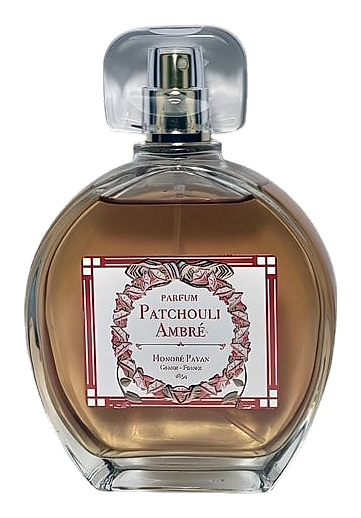
Patchouli Ambré comes from Honoré Payan. Its name points directly to patchouli at the center and the amber direction associated with the fragrance. The verified composition moves from patchouli, labdanum, and cedar through tolu balsam and tree moss, then settles into patchouli, musk, and vanilla. Patchouli appears at both the opening and the base, giving the composition a continuous material thread from first impression to final trail. Labdanum contributes resinous warmth, cedar brings a woody structure, tree moss adds a green, damp quality, and tolu balsam introduces a sweet balsamic transition. Musk and vanilla soften the drydown while patchouli remains clearly present. No specific launch year or personal inspiration is confirmed.
The unusual part is the repetition of patchouli through the full pyramid. It isn't a fleeting aromatic effect; it carries from the opening into the base while labdanum brings resinous warmth, cedar adds structure, and tree moss gives the heart a damp woodland character. Tolu balsam adds a sweet, balsamic handoff, while musk and vanilla keep the final trail soft and skin-close. The result is earthy without becoming purely rustic, with the amber direction adding a warm, rounded aspect to the composition.
The evolution
The opening lands with the directness of patchouli, shaped by labdanum and the dry pull of cedar. It can read almost mineral and woody, with a dark green edge that gives the fragrance a grounded character. As it develops, tolu balsam and tree moss introduce a balsamic, mossy middle, like rain settling into shaded bark. Patchouli remains the anchor, but its character shifts from blunt earth to warmer resin. The drydown brings musk and vanilla into focus, softening the sharper edges without erasing the soil-like depth. The composition moves from a direct opening through a resinous, mossy heart and into a softer base where patchouli, musk, and vanilla remain in focus.
Cultural impact
Patchouli Ambré can be understood through its note composition and the way patchouli connects the opening, heart, and base. Its profile combines earthy patchouli with labdanum, cedar, tolu balsam, tree moss, musk, and vanilla, offering a clear view of how resinous, woody, mossy, sweet, and soft elements work together. The fragrance is presented without a specific launch date or confirmed personal inspiration, leaving its identity closely tied to its materials and their progression through the composition.
The House
Honore PayanHonoré Payan is one of Grasse's oldest continuously operating perfume houses, founded in 1854 on the Place de la Poissonnerie in the historic center of France's perfume capital. Still family-run after more than 170 years, the house produces fragrances built around raw materials sourced from the Provençal countryside surrounding it. Its catalog spans classic eaux de toilette, oriental vanilles, patchouli-centric compositions like Patchouli 1854 and Patchouli Antique, and floral soliflores such as Jasmin, 1908. The house also operates a boutique on rue des Filatiers in Toulouse, introducing its Grasse-rooted palette to a wider French audience.
The Creator
Honoré PayanPayan favors materials with complexity and a degree of unpredictability, ingredients that shift on skin rather than sitting still. His base work tends to lean on woods with grain, iris pallida rather than orris derivatives, oakmoss extractions handled with the careful dosing t…