
The Story
Why it exists.
The beginning
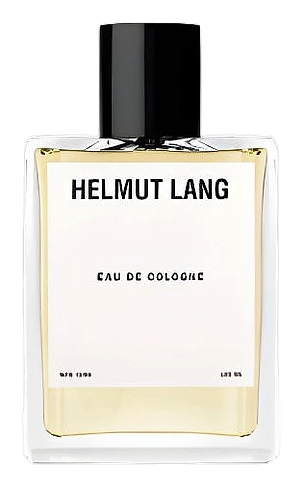
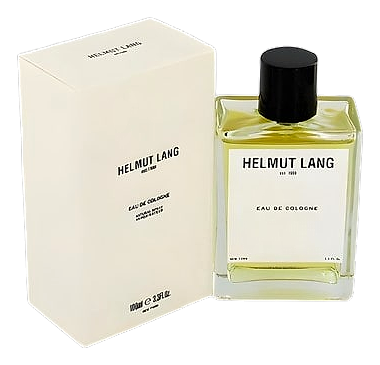
In 2000, Helmut Lang released a fragrance collection that rejected the perfume industry's obsession with presence. Maurice Roucel was the perfumer behind both the Eau de Parfum and its counterpart, an Eau de Cologne that broke every convention of what a cologne should be. Lang's fashion had always been about reduction, about garments that revealed rather than concealed. Roucel translated that same philosophy into scent.
The result is a cologne that smells like nothing its category promised. No spiky citrus opener. No sharp bergamot burst. Instead, lavender arrives soft and almost creamy, joined by rosemary that keeps things grounded without ever turning sharp. The heart, heliotrope, lily of the valley, rose, jasmine, stays intimate, never blooming loud. This is a fragrance that assumes you don't need to announce yourself to feel confident.
The evolution
Lavender and rosemary arrive quietly, aromatic and clean. Within minutes the florals begin their work, heliotrope and lily of the valley softening what could have been sharp, rose and jasmine adding warmth without sweetness. The handoff to the base happens without fanfare. Cedar and sandalwood arrive next, wrapping around musk and patchouli in a drydown that stays close to the skin. Six to eight hours on most skin, intimate throughout. The powdery quality doesn't fade, it deepens into something that reads as skin-warm, as belonging, rather than as performance.
Cultural impact
The 2000 Helmut Lang fragrance collection arrived at a moment when fashion houses were still learning how to translate aesthetic identity into scent. The lineup included Velviona, Cuiron, and Cuiron pour Homme, all created with Roucel's technical precision. The reissue in 2014 confirmed there was lasting appetite for that approach, understated compositions that refused to compete for attention.