
The Story
Why it exists.
The beginning
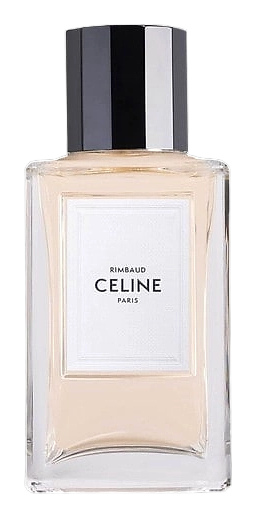
Rimbaud is named for Arthur Rimbaud, the French poet who defined poetic vision as a deliberate disordering of the senses. His verses were vivid, uncompromising, images that arrived without warning and refused to settle. The name invokes that sensibility. It sets expectations. Not a gentle floral. Not a polite lavender. Something that arrives with intention and refuses to be mistaken for something safe. In the Celine haute parfumerie collection, eleven fragrances each carry a name with weight. Rimbaud carries its own weight through the way the lavender works, not as a familiar masculine anchor but as something cooler, more ambiguous, folded into an iris-heavy structure that makes the herb say something different than it usually does.
The lavender-oriris combination has deep roots in classical perfumery. What Slimane does here is extract those materials to their quieter register, the lavender pillowed, the orris butter given room to breathe rather than perform. The wheat accord, drawn from the official description, adds a warm grain note that sits beneath the floral heart like a field seen from a distance. It doesn't announce itself. But without it, the composition feels less grounded, less real. This is a lavender fragrance for people who find most lavender fragrances either too sharp or too barbershop.
The evolution
The opening announces itself quickly. Neroli and citrus arrive clean and transparent, morning light through thin curtains. The citrus softens as the lavender begins to take shape, arriving not sharp but already settled into the composition. The heart unfolds: lavender and wheat at the center, with white flowers and orris rising through it. The orris brings its powdery, violet-adjacent quality, and this is where the fragrance becomes something distinct from a barbershop lavender or a masculine fougère. The base arrives gradually, never replacing the lavender but layering under it: vanilla adding warmth, woody notes giving the drydown structure, the orris continuing to linger like a quiet argument you're not sure you want to win.
Cultural impact
Lavender carries cultural weight in perfumery, a material with deep roots in the classical tradition, from Guerlain's Jicky in 1889 to the lavender waters of Caron's Pour Un Homme, a 1934 masculine reference that remains influential. Rimbaud offers lavender softened by orris and white flowers, warmed by vanilla rather than fougère structure. The lavender-orris combination echoes the reference but refracted through something more architectural, cooler, more abstract, stripped of romanticism. What the fragrance offers that the classic reference does not is restraint.