
The Story
Why it exists.
The beginning
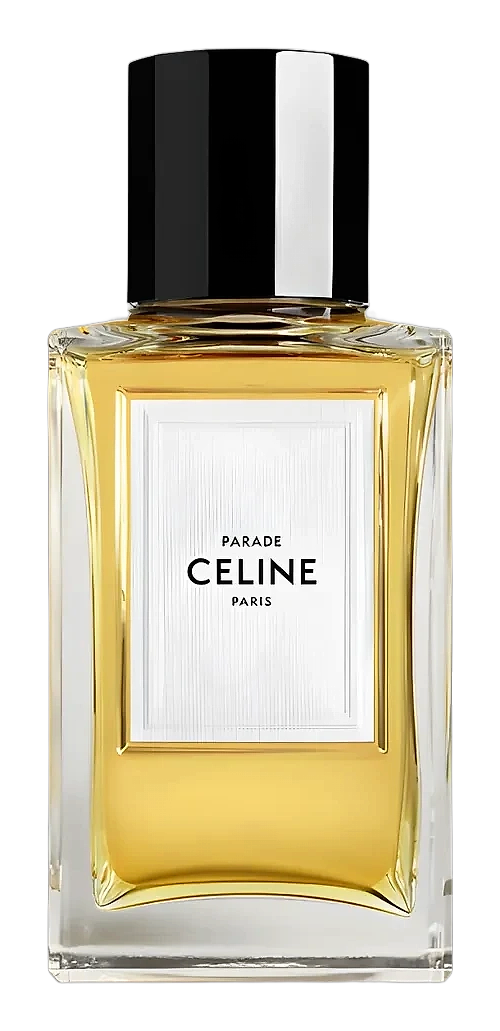
Parade arrived in 2019 as part of Hedi Slimane's deliberate revival of haute parfumerie at Celine. Slimane designed the eleven-scent collection with each fragrance standing as its own complete expression, positioned as unisex from the start. With Parade, the brief was clear from the name: a procession, a ritual, a moment of considered presentation. Not a statement. An arrival. The composition unfolds in measured stages, beginning with crisp citrus that opens the experience before revealing deeper layers beneath.
The Celine copy describes it as a musky, powdery cologne that channels the ritual of male sartorial appearance, connecting 19th-century literary dandies to 60s rock musicians, a lineage of people who understood that how you present yourself is its own form of self-expression. The note structure reflects this: neroli and bergamot as the opening ceremony, clean and bright, then oakmoss and vetiver settling into something earthier, more grounded. The powder-dry trail is where it all comes together, that addictive, feminine facet the brand references isn't sweetness or florals. It's restraint made addictive.
The evolution
Parade opens at the wrist with a burst of clear citrus, bergamot first, then neroli blooming behind it like orange blossom under late-morning sun. It stays bright for the first thirty minutes, a freshness that doesn't demand attention. Then the handoff: oakmoss arrives quietly, bringing a green, slightly mossy texture that steadies the composition. Vetiver follows, earthy and mineral, the dry root that grounds what came before. The vetiver and oakmoss play against each other, neither dominating, each tempering the other's moreassertive qualities. The drydown is where it earns its reputation: clean musk that reads as powder, a residual scent that lingers close to skin and develops quietly throughout the wear. Not a room fragrance. A companion.
Cultural impact
Parade represents a distinctive approach within contemporary perfumery, positioning itself against a landscape often dominated by aggressive marketing and niche posturing. The fragrance offers a quiet alternative, relying on composition and restraint rather than spectacle to make its case. Those who encounter it tend to appreciate what it doesn't do: it doesn't announce itself, doesn't demand attention, doesn't try to justify its presence. Instead, it simply exists, confident in its own design. The result is a fragrance that feels right for people who don't need their choices validated by visibility.