
The Story
Why it exists.
The beginning
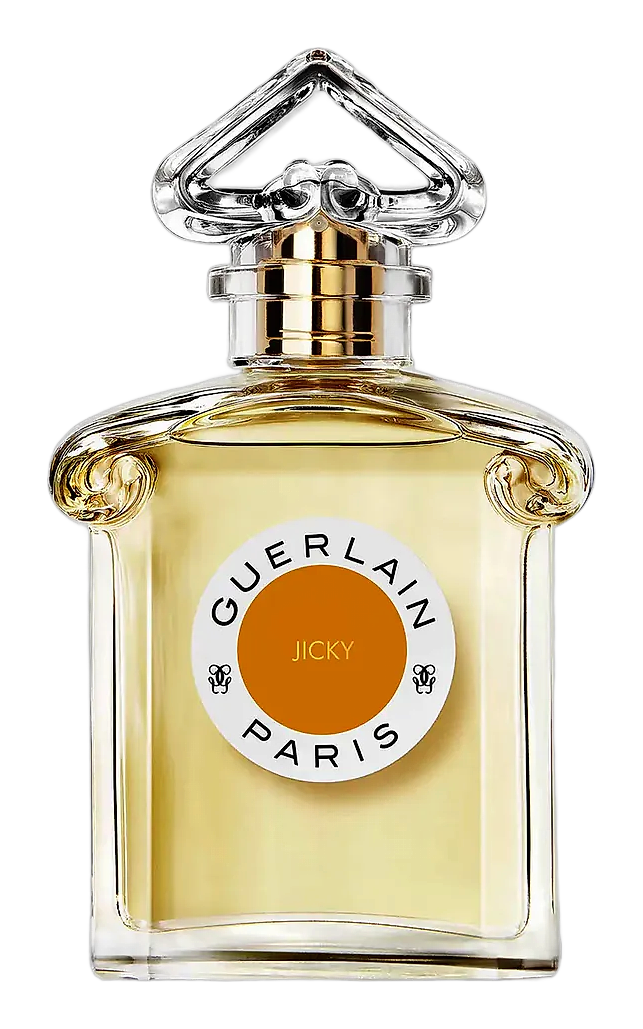
In 1889, Aimé Guerlain created something the perfume world wasn't ready for. Jicky was the first fragrance that didn't try to smell like a flower. It didn't simulate nature. It built from it. The name honors a young English woman Aimé knew, and coincidentally, her nephew Jacques, whose diminutive was also Jicky. The 2021 Eau de Parfum returns to that original formula, keeping the structure that made it revolutionary. Lavender at the front, vanilla at the back, and everything else in between, exactly as it was in 1889, when perfumery changed forever.
The original Jicky introduced vanillin and coumarin as independent fragrance building blocks, not supports for natural materials. This was the break. Most perfumes of the era tried to reproduce the scent of flowers, rose, jasmine, orange blossom, using the actual materials. Aimé Guerlain went the other direction, building a composition that stood on its own logic. The 2021 EDP keeps that architecture intact. Lavender and vanilla as structural pillars, not incidental notes. It's a choice that still reads as deliberate, more than a century later.
The evolution
The opening still hits the same way, a sharp wave of lavender and citrus that almost feels medicinal. Bergamot and mandarin orange cut clean through the rosemary, and for about thirty minutes this smells like something you could file under aromatic. Then the sweetness arrives. Not gradually. It takes over. Vanilla and tonka bean push the lavender aside, and what stays is warm, soft, and quietly animalic, the civet adding a kind of honesty the floral notes don't have. By hour four you're in the vanilla-benzoin drydown, close to the skin, still present. Lasts eight to ten hours on most people. The sillage stays moderate, this isn't a fragrance that announces itself. It stays.
Cultural impact
Jicky is one of the oldest perfumes in continuous production, the 1889 original still exists, and the 2021 EDP is a faithful recreation of it. It was the first fragrance to use synthetic materials (vanillin, coumarin) as structural elements rather than supports for naturals. It is widely considered the first modern perfume, and the first unisex fragrance, lavender and vanilla together, neither traditionally masculine nor feminine. The 2021 EDP carries that legacy. It's a fragrance that people seek out knowing what it is and what it means, which is rare for anything launched in the last decade.
The House
GuerlainGuerlain stands as one of the oldest and most revered perfume houses in the world, founded in Paris in 1828 by Pierre-François-Pascal Guerlain. What began as a boutique on rue de Rivoli quickly became the preferred destination for Parisian society, attracting dandies and elegant women who sought custom-crafted fragrances. The house's influence grew to such heights that Guerlain earned the title of Official Perfumer to Napoleon III after presenting Eau de Cologne Impériale to Empress Eugénie as a wedding gift in 1853. This royal patronage marked the beginning of Guerlain's enduring association with European aristocracy, as the house went on to create fragrances for Queen Victoria and Queen Isabella II of Spain. Today, under the creative direction of Thierry Wasser, the fifth-generation perfumer, Guerlain continues to shape the landscape of fine fragrance with a portfolio spanning over 1,100 olfactory creations. The house remains headquartered at its legendary Champs-Élysées mansion, a historic monument that anchors Guerlain's position at the intersection of heritage and contemporary luxury.
The Creator
Aimé GuerlainAimé's signatures included the masterful marriage of natural and synthetic materials, a technique considered radical at the time. He favored contrasts: bright citrus top notes anchored by warm, animalic bases.