
The Story
Why it exists.
The beginning
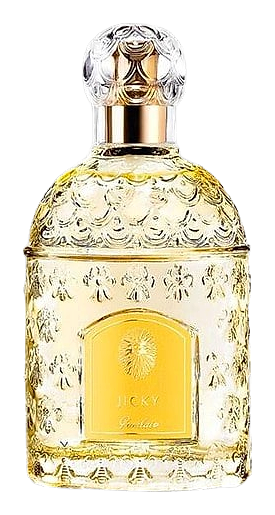
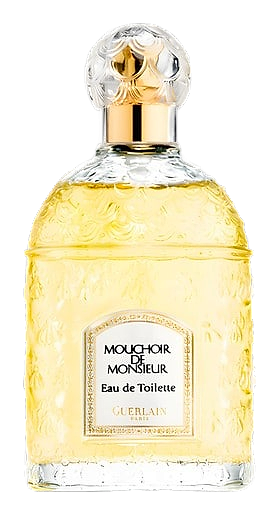
Mouchoir de Monsieur translates to "Gentleman's Handkerchief", and the name is the concept. A scented silk square, the kind of intimate personal accessory a man of a certain class would carry in his breast pocket. The fragrance itself captures that private elegance: powdery, warm, and unexpectedly animalic underneath. Created in 1904 by Jacques Guerlain, this scent pushed further into oriental territory while retaining the aromatic lavender and citrus brightness that defined the era's masculine fragrances. Where Jicky bridged the animalic past and floral future of perfumery, Mouchoir de Monsieur leaned fully into warmth, vanilla, tonka, iris, softened by white florals and grounded by oakmoss.
What makes this composition unusual is the tension between its powdery and animalic registers. The iris and vanilla create a soft, talc-like warmth, clean, even delicate. But underneath, oakmoss and patchouli introduce an earthy, slightly wild quality that refuses to let the fragrance stay merely pretty. Tonka bean amplifies the sweetness while adding that characteristic coumarin depth. The result is a fragrance that smells both impeccably groomed and, at its base, quietly sensual, the olfactory equivalent of a man who looks composed from across the room but smells like something worth leaning into once you're close enough.
The evolution
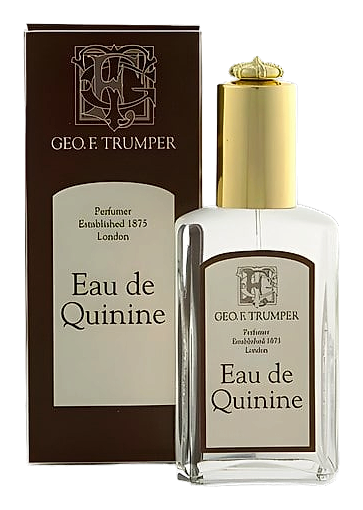
The opening hits sharp. Lavender and bergamot arrive bright, but lemon verbena introduces a camphor-like edge that reads almost medicinal, a ghost of the 1889 reference point. On some skin, that first thirty minutes smells like mothballs. On others, it's bracing and clean in a way that clears the room. Either way, it doesn't last. Once the top notes burn off, jasmine and rose emerge, white florals softened by neroli's bitter orange blossom. Tonka bean smooths everything, adding sweetness without pushing into gourmand. The patchouli surfaces here too, giving the heart a dry, earthy quality that keeps the florals from smelling precious. The cinnamon arrives last in the heart phase, a dry spice that reads more as warmth than heat.
Cultural impact
Since February 2014, the original 1904 Extrait version of Mouchoir de Monsieur has been exhibited in the Hall of Mirrors at Maison Guerlain on the Champs-Élysées. That placement puts it alongside the house's most significant creations, fragrances that represent the height of the Guerlain tradition. The scent sits adjacent to Jicky in the Guerlain canon: where Jicky bridged the animalic fragrances of the 19th century with the florals of the 20th, Mouchoir de Monsieur pushed further into oriental warmth and powdery elegance.
The House
GuerlainGuerlain stands as one of the oldest and most revered perfume houses in the world, founded in Paris in 1828 by Pierre-François-Pascal Guerlain. What began as a boutique on rue de Rivoli quickly became the preferred destination for Parisian society, attracting dandies and elegant women who sought custom-crafted fragrances. The house's influence grew to such heights that Guerlain earned the title of Official Perfumer to Napoleon III after presenting Eau de Cologne Impériale to Empress Eugénie as a wedding gift in 1853. This royal patronage marked the beginning of Guerlain's enduring association with European aristocracy, as the house went on to create fragrances for Queen Victoria and Queen Isabella II of Spain. Today, under the creative direction of Thierry Wasser, the fifth-generation perfumer, Guerlain continues to shape the landscape of fine fragrance with a portfolio spanning over 1,100 olfactory creations. The house remains headquartered at its legendary Champs-Élysées mansion, a historic monument that anchors Guerlain's position at the intersection of heritage and contemporary luxury.
The Creator
Jacques GuerlainJacques was among the first perfumers to work seriously with synthetic ingredients alongside naturals, publishing on essential oils with chemist Justin Dupont and experimenting with perfuming ink. His technical approach was precise: volume measurements for liquids, careful wei…