The Story
Why it exists.
The beginning
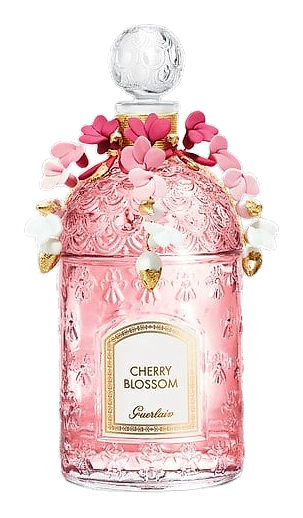
In 2020, Guerlain released Cherry Blossom 2020 Millésime as a limited collector's edition, drawn from the house's ongoing tribute to sakura season. The nose behind this fragrance is Jean-Paul Guerlain, and the release builds on the same cherry blossom motif he has revisited across multiple formulations over the years. The composition centers on the fleeting moment when sakura petals are at their peak, suspended between opening and falling. The Millésime designation signals a vintage release, part of Guerlain's tradition of marking a specific moment in fragrance rather than chasing an eternal version. The bottle, finished in pale pink with a pale cap, reinforces the seasonal theme visually, the color itself doing much of the storytelling before the juice even hits the air.
What sets this composition apart is its restraint. Where most cherry blossom fragrances lean syrupy or powdery, this one grounds the bloom in green tea and bergamot, letting the florals arrive like light through gauze rather than a corsage. The lilac and jasmine add depth without weight, and the base holds to white musk alone. It's a study in what to leave out.
The evolution
The first thirty minutes belong to the top. Green tea arrives sharp and slightly bitter, bergamot brightening the edges like light catching on a glass. The cherry blossom doesn't rush. It blooms quietly between the citrus and the heart, gaining presence as the tea softens. By the second hour, lilac and jasmine have taken over, a powdery white-floral hush that feels like walking through a garden in slow motion. White musk arrives underneath early, giving everything a clean linen base from the start. The drydown is where this fragrance quiets down completely. The florals recede, the musk stays, and what lingers is a sheer floral veil against warm skin. The progression feels less like a ladder and more like a slow tide, each phase bleeding into the next without hard edges.
Cultural impact
Cherry Blossom 2020 Millésime exists at the intersection of collector culture and seasonal ritual. Limited to 200 bottles and sold exclusively in Japan, it carries the cachet of a numbered release for fragrance collectors who track Guerlain's Millésime vintages. The scarcity alone makes it a grail piece for anyone who follows Guerlain's limited output, and the geographic exclusivity adds a layer of difficulty that drives the collector appeal even further. The cherry blossom theme itself is inherently tied to a specific window of the year, which gives the release a built-in seasonality that permanent flankers cannot replicate.
The House
GuerlainGuerlain stands as one of the oldest and most revered perfume houses in the world, founded in Paris in 1828 by Pierre-François-Pascal Guerlain. What began as a boutique on rue de Rivoli quickly became the preferred destination for Parisian society, attracting dandies and elegant women who sought custom-crafted fragrances. The house's influence grew to such heights that Guerlain earned the title of Official Perfumer to Napoleon III after presenting Eau de Cologne Impériale to Empress Eugénie as a wedding gift in 1853. This royal patronage marked the beginning of Guerlain's enduring association with European aristocracy, as the house went on to create fragrances for Queen Victoria and Queen Isabella II of Spain. Today, under the creative direction of Thierry Wasser, the fifth-generation perfumer, Guerlain continues to shape the landscape of fine fragrance with a portfolio spanning over 1,100 olfactory creations. The house remains headquartered at its legendary Champs-Élysées mansion, a historic monument that anchors Guerlain's position at the intersection of heritage and contemporary luxury.
The Creator
Jean-Paul GuerlainJean-Paul Guerlain's style resists easy categorization, though richness and depth define nearly every composition. He favored opulent oriental structures, warm woods and resins, and florals treated with almost sculptural precision.