The Story
Why it exists.
The beginning
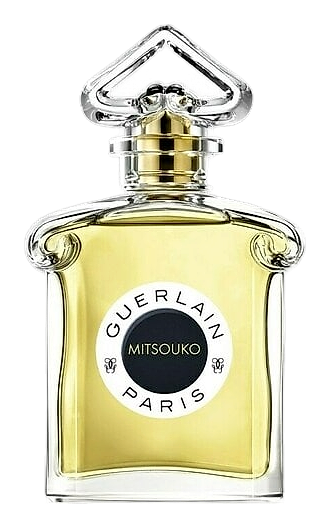
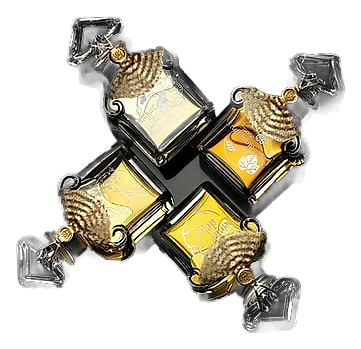
Jean-Paul Guerlain designed Brume d'Automne as the autumn chapter of Les Quatre Saisons, the house's four-fragrance meditation on seasonal feeling. Released in 2008, it arrives at the moment the light shifts and the air turns that particular crisp that makes everything smell different. Not the beginning of cold. The exhale after warmth.
What makes this composition hold together is its refusal to choose between two instincts. The top is all clarity, rosemary and coriander as a kind of aromatic brightness, like a garden just after rain. Then the heart introduces rose and patchouli in a pairing that could go powdery, earthy, or sweet depending on the hand. Here, Guerlain finds the middle path: a rose that is neither fragile nor heavy, grounded by ylang-ylang's creamy warmth and held in check by wormwood's clean bitterness.
The evolution
The opening arrives clean and immediate, rosemary cutting bright against pink pepper's soft prickle. Thirty minutes in, the coriander recedes and Bulgarian rose takes over, but not the sweet kind. This rose is full, almost tannic, pressed between pages of something old. The patchouli arrives at the same time, not as a base note waiting in the wings but as a counterweight from the start, keeping the florals grounded. Ylang-ylang threads through the heart with a creamy warmth that prevents the whole thing from going too austere. As it settles into its drydown, sandalwood first, then vetiver, the composition strips back to its essentials. The rose doesn't disappear. It becomes the memory of a rose, warm and powdery and close to the skin. This is where the fragrance lives longest: intimate, personal, the kind of sillage that only someone standing beside you will notice.
Cultural impact
Brume d'Automne is part of Guerlain's Les Quatre Saisons collection, launched in 2008 under Jean-Paul Guerlain, representing the house's seasonal meditation on autumn. The collection positions each fragrance as a fleeting atmospheric capture rather than a permanent fixture. Each scent captures a distinct seasonal moment, inviting wearers to experience autumn's atmosphere through a delicate mist.
The House
GuerlainGuerlain stands as one of the oldest and most revered perfume houses in the world, founded in Paris in 1828 by Pierre-François-Pascal Guerlain. What began as a boutique on rue de Rivoli quickly became the preferred destination for Parisian society, attracting dandies and elegant women who sought custom-crafted fragrances. The house's influence grew to such heights that Guerlain earned the title of Official Perfumer to Napoleon III after presenting Eau de Cologne Impériale to Empress Eugénie as a wedding gift in 1853. This royal patronage marked the beginning of Guerlain's enduring association with European aristocracy, as the house went on to create fragrances for Queen Victoria and Queen Isabella II of Spain. Today, under the creative direction of Thierry Wasser, the fifth-generation perfumer, Guerlain continues to shape the landscape of fine fragrance with a portfolio spanning over 1,100 olfactory creations. The house remains headquartered at its legendary Champs-Élysées mansion, a historic monument that anchors Guerlain's position at the intersection of heritage and contemporary luxury.
The Creator
Jean-Paul GuerlainJean-Paul Guerlain's style resists easy categorization, though richness and depth define nearly every composition. He favored opulent oriental structures, warm woods and resins, and florals treated with almost sculptural precision.