The Story
Why it exists.
The beginning
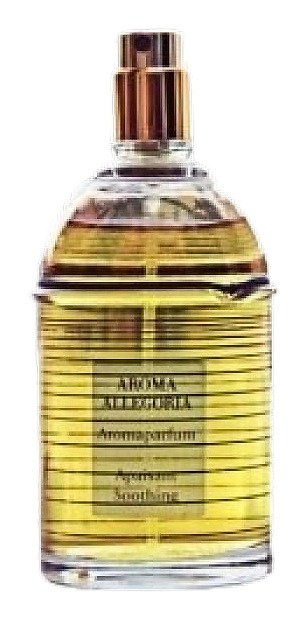
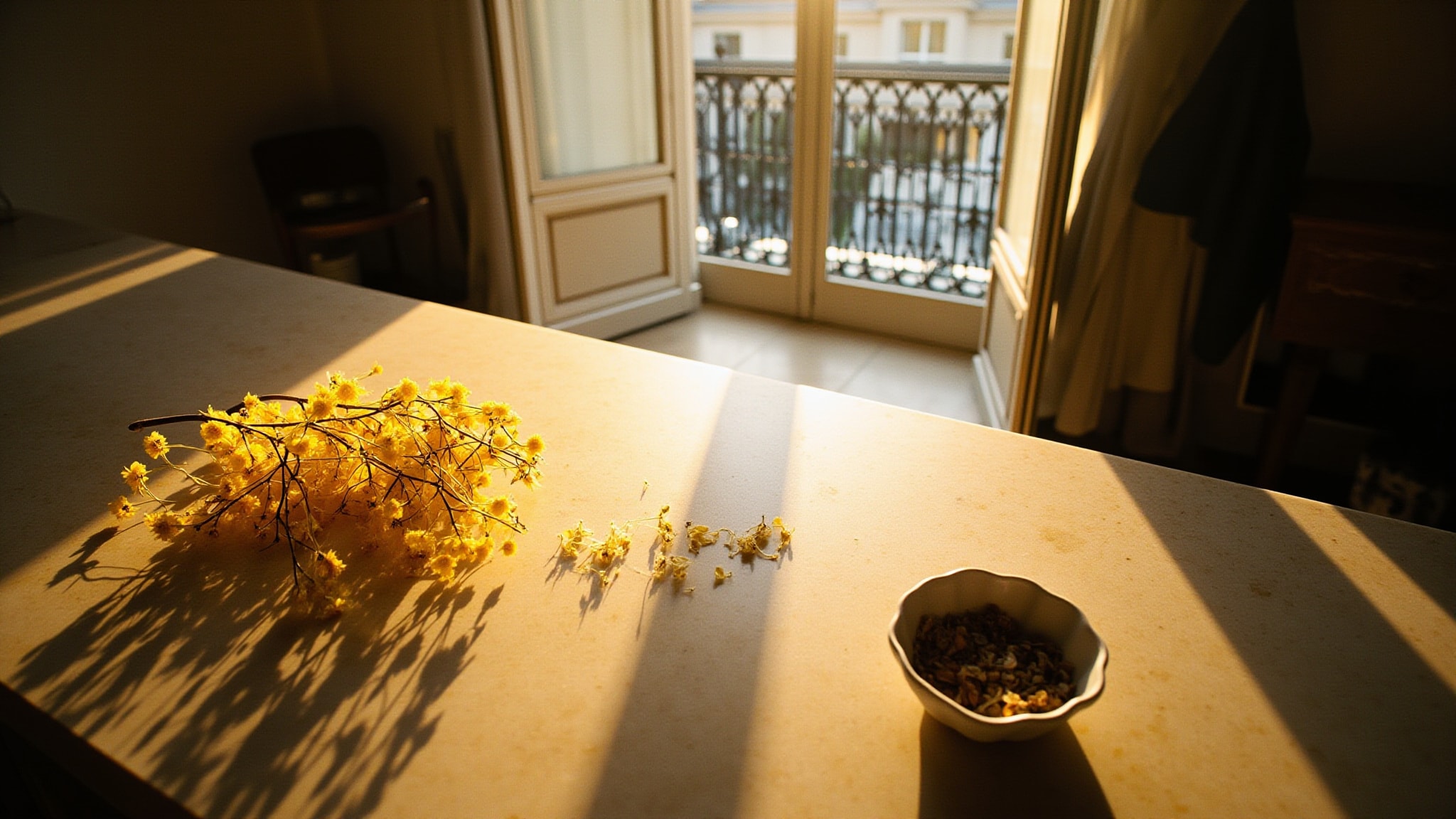
Apaisant arrived in 2001 as part of Guerlain's Aroma Allegoria collection, a line built around single botanical moods translated into wearable form. Jean-Paul Guerlain composed this one around a quiet ideal: the feeling of being soothed. Not sedated. Soothed, the way a long lunch in a sunlit courtyard calms the nervous system without asking permission. Apaisant leaned fully into that brief. Freesia and a curious brush of vermouth open with a clean, almost cocktail-like snap, then settle into a heart of mimosa, linden blossom, chamomile, and ylang-ylang, flowers traditionally associated with calm rather than seduction. Vanilla anchors the base, but it behaves here, never dominating, letting the florals hold the conversation.
What makes this composition distinctive is the restraint of the vanilla. Here it steps back into a supporting role, which allows the mimosa and linden blossom to carry an unusual sweetness without tipping into confection. The vermouth in the opening adds a bitter herbal thread that keeps the florals honest, preventing them from reading as mere potpourri. Chamomile contributes its dried-herb warmth, the smell of tea steeping rather than fresh petals. The interplay between these elements creates a fragrance that breathes as much as it wears.
The evolution
The first fifteen minutes are the most surprising. Freesia arrives bright and slightly peppery, but the vermouth underneath adds an unexpected bitterness, like the first sip of a drink you didn't order. It reads almost cocktail-adjacent, which is disorienting in a floral, then somehow right. By the thirty-minute mark the mimosa and linden blossom have taken over completely, and the scent shifts into something warmer and more honeyed. This is the golden phase, the one reviewers describe as liquid sunshine. It holds for several hours, the ylang-ylang adding a creamy fullness while chamomile keeps pulling it back toward something herbal and grounded. The vanilla only really surfaces in the deep drydown, around hour five or six, and even then it arrives soft, more like warmth rising from skin than a distinct note. What lingers past the eight-hour mark is a close-to-skin sweetness, mostly linden and vanilla fused together, the kind of trace scent someone catches only when they're near. It doesn't project. It doesn't need to.
Cultural impact
Apaisant reads as one of the more contemplative fragrances in the Aroma Allegoria line, a composition built around the idea of botanical calm rather than seduction or spectacle. Its character suits warmer months when heavier compositions feel like too much, offering a kind of olfactory quiet that stands apart from louder floral launches. The fragrance demonstrates a more nuanced approach than a straightforward soliflore, weaving multiple floral voices into a cohesive whole.
The House
GuerlainGuerlain stands as one of the oldest and most revered perfume houses in the world, founded in Paris in 1828 by Pierre-François-Pascal Guerlain. What began as a boutique on rue de Rivoli quickly became the preferred destination for Parisian society, attracting dandies and elegant women who sought custom-crafted fragrances. The house's influence grew to such heights that Guerlain earned the title of Official Perfumer to Napoleon III after presenting Eau de Cologne Impériale to Empress Eugénie as a wedding gift in 1853. This royal patronage marked the beginning of Guerlain's enduring association with European aristocracy, as the house went on to create fragrances for Queen Victoria and Queen Isabella II of Spain. Today, under the creative direction of Thierry Wasser, the fifth-generation perfumer, Guerlain continues to shape the landscape of fine fragrance with a portfolio spanning over 1,100 olfactory creations. The house remains headquartered at its legendary Champs-Élysées mansion, a historic monument that anchors Guerlain's position at the intersection of heritage and contemporary luxury.
The Creator
Jean-Paul GuerlainJean-Paul Guerlain's style resists easy categorization, though richness and depth define nearly every composition. He favored opulent oriental structures, warm woods and resins, and florals treated with almost sculptural precision.