The Story
Why it exists.
The beginning
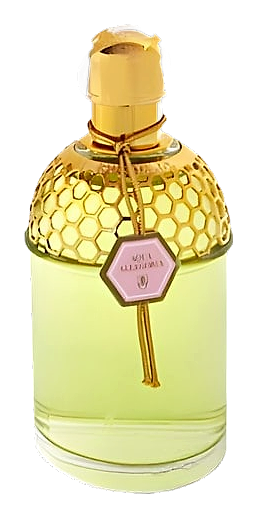
In 1999, Jean-Paul Guerlain added Rosa Magnifica to the Aqua Allegoria line. The Aqua Allegorias were never meant to be heavy or ceremonial. They were bottled invitations to step outside, to smell the air after rain, to remember what May feels like when it hasn't been ruined by perfume math. Rosa Magnifica was the rose garden of that collection, unapologetically so. No restraint, no hedging. Just the flower, given full stage. The scent opens with the snap of crushed petals underfoot, that green sting you only get from real roses still on the stem, before settling into something rounder and unmistakably floral. You can almost taste the dew on it, the cool first hour of a morning spent outside.
What makes the composition work isn't the rose alone. It's the architecture around it. Hyacinth brings a green, almost watery clarity at the top, the kind of cool breeze that cuts through the warmth before the bloom arrives. Violet deepens the hush, powdery and slightly melancholic, the shadow a petal casts when it falls on dark soil. Iris adds that cool, suede-like smoothness, a quiet counterweight to all that rose exuberance. Together, these heart notes build a layered bed where each bloom refuses to be overshadowed, a garden that feels curated rather than wild.
The evolution
The first fifteen minutes are almost startling in their freshness. Hyacinth and the green edges of violet do the talking, cool and dewy, the olfactory equivalent of stepping out of a shaded path into sudden sun. Then the rose arrives, but not as a single loud note. It builds in waves, one petal at a time, deepening from a sheer pink to something fuller and more velvety. By the second hour, iris has taken up residence, smoothing the edges, adding that powdered, almost suede-like softness that rounds out the composition. The drydown is where patience pays off. Somewhere around hour five or six, the powder settles into something musk-warmed, the rose still present but quieter now, folded into the violet and iris rather than rising above them. It clings close to skin, intimate rather than declarative, and the trail softens into a hush rather than a statement.
Cultural impact
Rosa Magnifica has earned a quiet following among rose lovers who want the flower given proper attention. It wears well across seasons, though it leans naturally toward spring and early summer, the months when rose feels most at home in the air. The fragrance performs well in casual settings, from a morning coffee to a long afternoon outdoors, without ever feeling out of place. Its strength is honesty: it knows what it wants to be, and it stays there without wandering into territory that would dilute the central idea.
The House
GuerlainGuerlain stands as one of the oldest and most revered perfume houses in the world, founded in Paris in 1828 by Pierre-François-Pascal Guerlain. What began as a boutique on rue de Rivoli quickly became the preferred destination for Parisian society, attracting dandies and elegant women who sought custom-crafted fragrances. The house's influence grew to such heights that Guerlain earned the title of Official Perfumer to Napoleon III after presenting Eau de Cologne Impériale to Empress Eugénie as a wedding gift in 1853. This royal patronage marked the beginning of Guerlain's enduring association with European aristocracy, as the house went on to create fragrances for Queen Victoria and Queen Isabella II of Spain. Today, under the creative direction of Thierry Wasser, the fifth-generation perfumer, Guerlain continues to shape the landscape of fine fragrance with a portfolio spanning over 1,100 olfactory creations. The house remains headquartered at its legendary Champs-Élysées mansion, a historic monument that anchors Guerlain's position at the intersection of heritage and contemporary luxury.
The Creator
Jean-Paul GuerlainJean-Paul Guerlain's style resists easy categorization, though richness and depth define nearly every composition. He favored opulent oriental structures, warm woods and resins, and florals treated with almost sculptural precision.