The Story
Why it exists.
The beginning
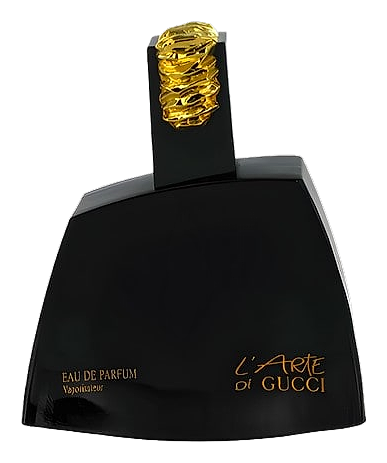
Launched in 1991, L'Arte di Gucci arrived at a moment when the fragrance world was still chasing clean, minimalist aesthetics. Gucci commissioned this scent as a statement, an ode to the house's maximalist philosophy at a time when subtlety was the default setting. The name translates to "The Art of Gucci," placing the fragrance directly at the center of the house's creative identity. It wasn't meant to blend in. It was meant to announce.
What makes L'Arte di Gucci unusual within the Gucci catalog is its structural ambition. Where many house fragrances lean on a single dominant note, this composition builds from aldehydes through a dense floral heart and lands on a leather-oakmoss base that reads almost vintage by modern standards. The Mimosa in the heart is rarely used as a primary material, it brings a powdery, honeyed warmth that sits between ylang-ylang and iris without becoming either. The result is a yellow floral that doesn't read as sweet. It reads as rich.
The evolution
The opening arrives fast: aldehydes create an immediate shimmer, almost like the smell of sunlight on cold marble. Bergamot and green notes cut through for about twenty minutes before the floral heart takes over. Mimosa and tuberose dominate the middle phase, this is where the fragrance earns its reputation for elegance. The rose underneath keeps everything grounded, prevents the florals from floating into something too precious. The drydown is where L'Arte di Gucci separates itself. Leather and oakmoss arrive together, followed by patchouli and amber. The musk holds everything together. On most skin types, this phase begins around the third hour and carries through to hour eight or ten. On fabric, it can be detected the next morning.
Cultural impact
L'Arte di Gucci earned a reputation as one of the great rose chypres of its era, described by fragrance critics as both elegant and sexy at a time when those qualities rarely appeared together. The fragrance found its audience among women who wanted presence without loudness, richness without sweetness. It has remained in circulation through decades of reformulation, a testament to the structural integrity of its composition.