The Story
Why it exists.
The beginning
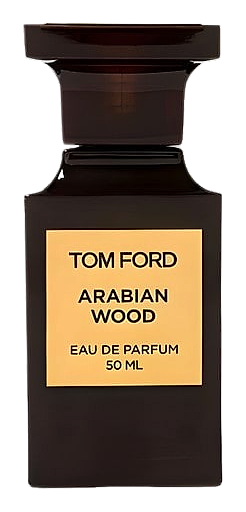
Tom Ford launched the Private Blend collection in 2007 as a direct-to-consumer niche fragrance line, working with some of the world's most respected perfumers to execute bold concepts with exceptional raw materials. The collection's philosophy is rooted in fragrance as declaration, not just a pleasant scent, but a statement of intent. Arabian Wood arrived in autumn 2008 as a regional exclusive for the Kuwait market before its broader 2009 debut at Galeries Lafayette alongside Champaca Absolute and Italian Cypress, positioning it as one of the collection's more unusual compositional experiments. Rodrigo Flores-Roux built Arabian Wood as a woody chypre with a clear structural ambition: the fragrance opens on an unusual balance of cool green and warm floral, creating a tension that runs through the entire composition rather than resolving quickly into something familiar.
The most interesting structural choice in Arabian Wood is the rose-galbanum pairing at the top. Galbanum is a green resin that typically appears in men's fragrances for its cold, aromatic quality, it's the smell of restraint, not seduction. Bulgarian rose is warm, soft, almost sweet. Putting them together in the opening creates a tension that doesn't resolve immediately; the rose doesn't overtake the green, and the green doesn't kill the rose. They coexist for the first hour, which is unusual and gives the fragrance an aromatic quality more common to masculine chypres than to feminine florals. The heart deepens this complexity with gardenia, jasmine, and ylang-ylang, all white florals with different textures.
The evolution
The opening hits sharp. Galbanum arrives cold, cutting through the top notes like a blade, with bergamot and lavender providing only minimal softening around its edges. This is a deliberate choice, Rodrigo Flores-Roux wanted the green to lead, to announce itself before the rose has a chance to settle. Bulgarian rose is already in the opening, waiting beneath the galbanum, but it doesn't announce itself for the first thirty to forty minutes. When it arrives, it doesn't bloom so much as unfold quietly, merging with gardenia and ylang-ylang into a white floral heart that feels warm and honeyed rather than delicate. The drydown is where this fragrance earns its name. Moss and patchouli build a deep, earthy base while sandalwood and cedar soften the edges, and tonka bean adds a warmth that keeps the drydown from becoming austere. The rose stays, it doesn't disappear after the heart phase.
Cultural impact
Arabian Wood occupies an unusual position in the Private Blend lineup, neither the house's most famous release nor its most obscure, but one that people who know it tend to feel strongly about. The woody chypre structure places it in a category that was more common in vintage perfumery than in contemporary luxury, and the galbanum-rose tension gives it an aromatic quality that sits between masculine and feminine without committing fully to either. Discontinued in recent years, it has developed a small cult following among collectors and fragrance enthusiasts who appreciate its structural complexity and its refusal to be easily categorized.