The Story
Why it exists.
The beginning
Eau du Matin arrived in 1984, a few years into Gianfranco Ferre's expansion beyond tailoring. The name, morning water, promised something fresh, but Annie Buzantian had other ideas. She built the fragrance around a tension: the cool green of early morning against the richness that accumulates once the sun rises and the garden heats up. The brief was architectural in the Ferre tradition: structure beneath the softness, a skeleton holding the florals in place rather than letting them sprawl. Buzantian delivered exactly that, a white floral that behaves like it has a spine.
What makes this composition unusual is the way the white florals are anchored, not softened. Tuberose and jasmine often float on skin; here they're grounded by hyacinth's green edge and coriander's spice, with the heart featuring carnation and orris root to add a powdery, almost waxy depth. The civet in the base is the tell, it's present without being confrontational, lending an animal warmth that keeps the florals from smelling like a display case. The eight top notes aren't a maximalist gesture; they're structural. Each layer has a job. The architecture holds.
The evolution
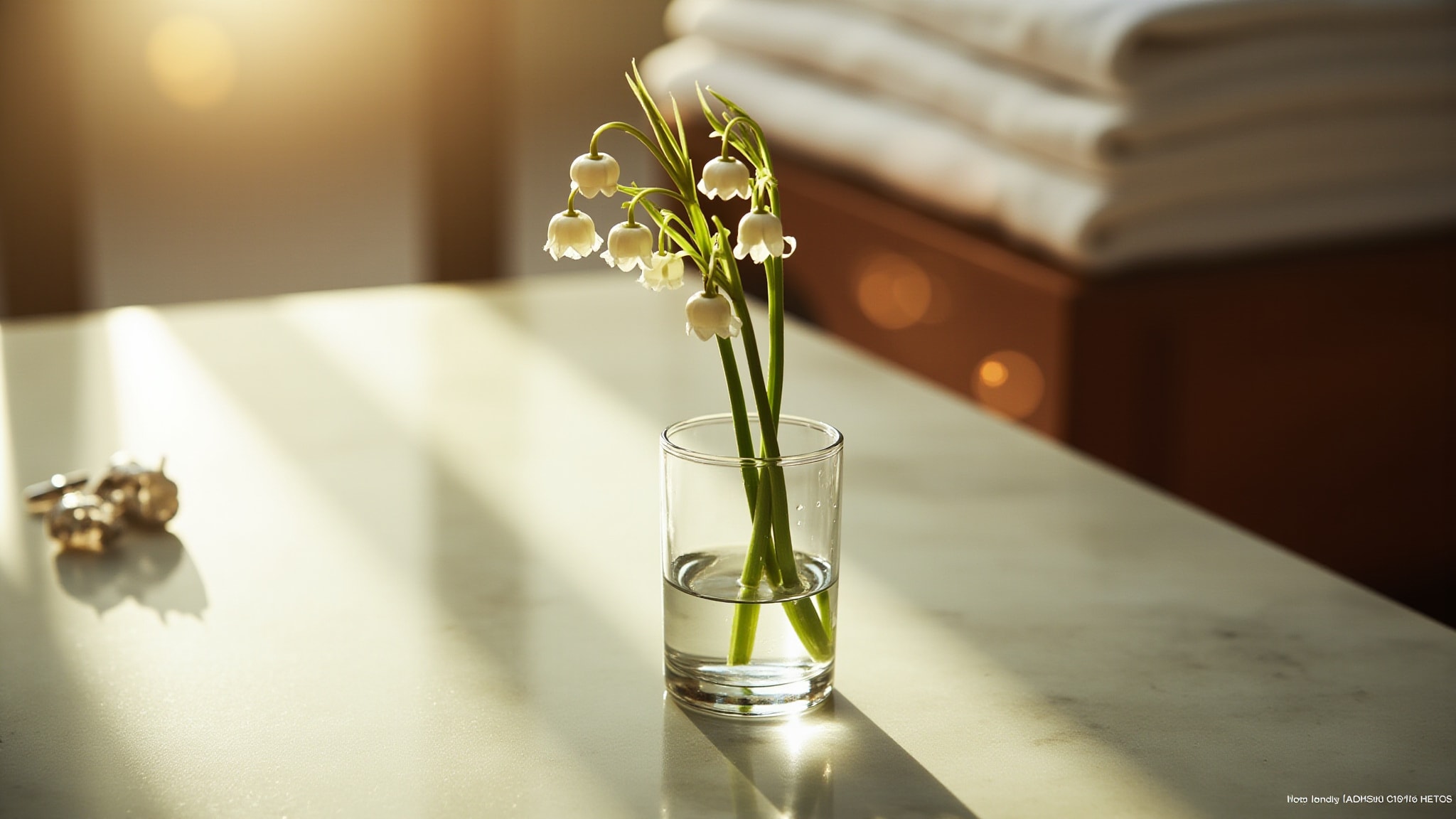
Opens bright and green, bergamot and hyacinth arriving first. Lily of the valley keeps things cool for maybe twenty minutes. Then the white florals take over, tuberose dominant, jasmine underneath, orange blossom threading through. The coriander is still there, keeping time. By hour two, carnation and rose arrive in the heart, adding a spiced sweetness that shifts the register from morning garden to afternoon greenhouse. The drydown belongs to the civet and benzoin, a warm, slightly animal base that stays close to the skin but lingers. Six to eight hours on most people. The next morning, there's a faint warmth on fabric, the amber and sandalwood didn't leave with the rest.
Cultural impact
Eau du Matin arrived during the mid-1980s designer fragrance boom, a period when fashion houses were establishing their olfactory identities alongside their clothing lines. The 1984 release positioned Gianfranco Ferre within this competitive market, and Annie Buzantian's architectural approach to the composition reflected the designer's own structured fashion aesthetic. The green-spiced opening set it apart from the heavier, sweeter florals dominating that era, creating a bridge between the opulent florals of the early 1980s and the cleaner aesthetics that followed. Its structured composition represented a shift toward complexity in designer scents.