The Story
Why it exists.
The beginning
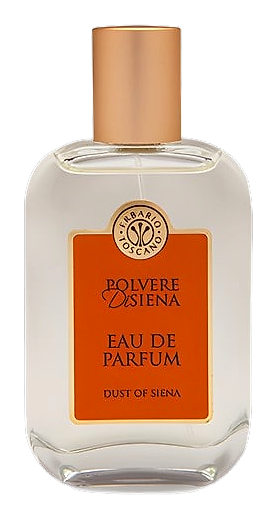
Polvere di Siena translates to the dust of Siena, that particular terracotta haze that settles over the Tuscan hill towns in late afternoon light. Erbario Toscano, the Tuscan herbalist house founded in the 1960s near Viareggio, built its identity on translating regional landscapes into wearable compositions. Polvere di Siena is the house reaching for Siena's singular color and warmth, not the postcard beauty, but the lived-in texture of it. The 2013 release captures something dusty and golden, the smell of old stone warmed by the tramontana retreating.
What makes Polvere di Siena worth knowing is how it handles vanilla. The note doesn't behave, it anchors everything else. Black pepper, clove, and carnation push against it, keeping the sweetness from softening into something forgettable. The florals (rose, lily of the valley) arrive mid-track, not to gentrify the spice but to give it somewhere human to rest. By the time the sandalwood and vetiver arrive, the vanilla has earned its place in the composition. It's not a vanilla fragrance pretending to be complex. It's a complex fragrance that happens to love vanilla.
The evolution
The opening hits with bergamot and elemi, a citrus-resin brightness that feels almost sharp before the black pepper arrives. That warmth takes over fast, rearranging the composition into something fuller. The vanilla doesn't wait for the heart phase; it pushes through the top notes almost immediately, meeting the clove and carnation before you can catalog them separately. By the second hour, you're in the full warmth, spice and sweet tangled together, florals underneath. The drydown is where it earns its name. Sandalwood and vetiver settle into the skin like dust, not projection. Six to eight hours on most skin, close enough that only the people beside you know you're wearing it.
Cultural impact
Polvere di Siena emerged in 2013 as Erbario Toscano crossed from botanical home scents into personal perfumery, carrying the brand's 70-year Florentine heritage into wearable form. The brand began as a herbalist operation in the 1940s, and the fragrance translates that botanical expertise into an intimate warm-spicy composition. Its vanilla-carnation-pepper profile draws on the same aromatic traditions that shaped Tuscan perfumery, connecting wearers to a landscape of sun-dried herbs, citrus groves, and resinous woods. The 2013 launch arrived during a broader cultural moment when niche houses were rediscovering artisanal roots, and Erbario Toscano positioned itself as an authentic alternative to synthetic mass-market compositions.