
The Story
Why it exists.
The beginning
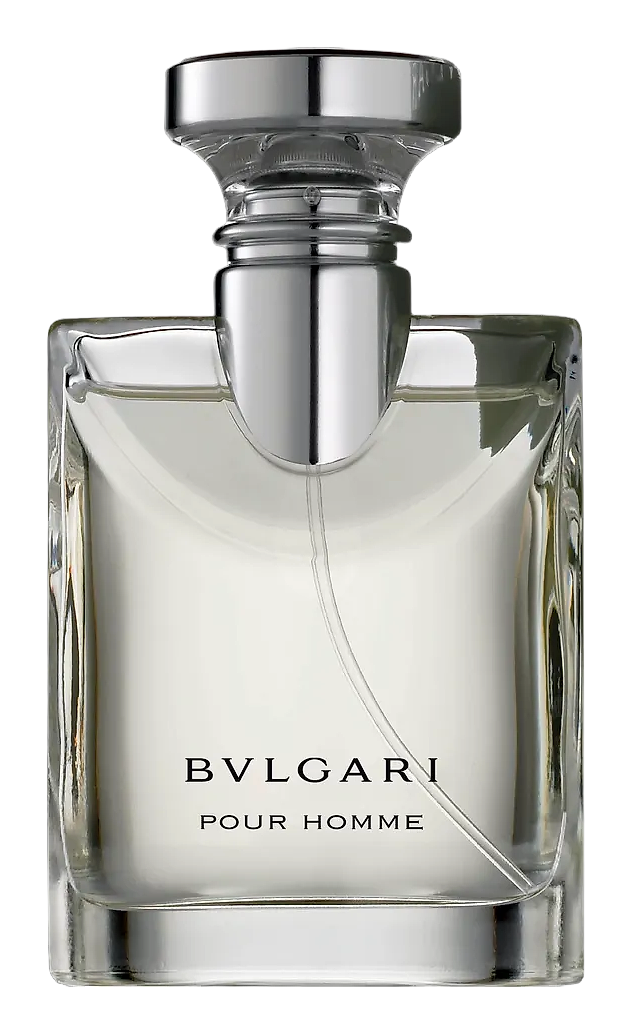
Jacques Cavallier-Belletrud created Bvlgari Pour Homme in 1996 as a statement of refined masculinity, the kind of man who treats his wardrobe and his fragrance as part of the same carefully considered whole. It arrived at a moment when men's fragrance was still largely defined by aquatic fougères and power ambers, and this composition quietly disrupted the category by doing something no one was doing: building around Darjeeling tea as the central structural element rather than a novelty accent.
The aldehydes here are essential, they give the opening that refined, almost silvery lift that separates this from conventional fresh scents. Combined with the tea, which carries a slightly tannic, mineral quality, the composition avoids the usual citrus-fresh territory entirely. The heart is where Cavallier-Belletrud earns the complexity: cardamom and coriander add warmth without sweetness, guaiac wood brings a faint smoky undertone, and the iris grounds everything with a powdery elegance that most men's fragrances of that era simply didn't attempt.
The evolution
The opening is immediate: bergamot and mandarin orange cut through with aldehydes, a bright, almost sparkling clarity that lasts perhaps ten minutes before the tea note asserts itself. The tea is the pivot point, slightly bitter, mineral, unmistakably distinctive. From there the heart opens gradually: cardamom and black pepper arrive with a clean warmth, while the guaiac wood and Brazilian rosewood introduce a faint resinous woodiness that prevents the composition from going too light. The iris shows up quietly, lending a powdery softness that keeps the spiced woods from becoming heavy. By the third hour, the base takes over, cedar and vetiver create a dry, woody trail, while musk and tonka bean add warmth that stays close to the skin. Six to eight hours is the expected arc. On fabric, it lingers longer, carrying a faint suggestion of warm cedar and tea the next morning.
Cultural impact
Bvlgari Pour Homme carved out a permanent place in the fragrance landscape by doing something simple but radical: it smelled like nothing else on the market. The tea note predated the tea fragrance trend by nearly two decades, earning it a devoted following among collectors who recognized its quiet sophistication. It's the fragrance a man reaches for when he's moved past needing to prove anything, which is precisely why it still gets recommended.