
The Story
Why it exists.
The beginning
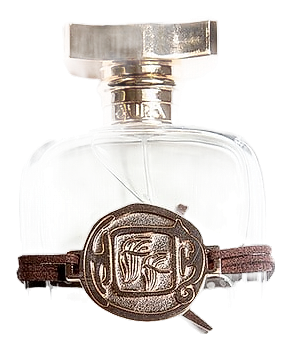
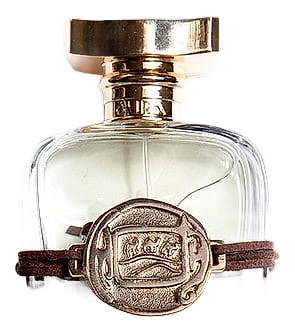
Tomyris was a Massagetae queen who defeated the Persian emperor Cyrus the Great, a victory that echoed across ancient histories. The legend describes her as proud-hearted, fearless, and absolute in her convictions. Angela Ciampagna translated that energy into a fragrance that opens with radiance but refuses to stay polite. The brief was clear: something worthy of a figure the steppes still remember after millennia. Unlike Western fragrance houses building around trend or archetype, Aura of Kazakhstan approaches each composition as an olfactory portrait, of place, of history, of specific cultural memory. Tomyris is the house at its most ambitious: named for a queen who defeated the most powerful empire of her era, wearing that defiance as a fragrance badge. Ciampagna worked with a palette that mirrors the legend's own tension. Bright, almost optimistic opening notes give way to something more complex, more confrontational.
The note structure here is unusual. Grass as a top note, not citrus, not aldehydes, not the expected opener, signals immediately that this isn't playing by standard luxury rules. Grass smells like morning in open air, like green cut sharp. It grounds the tangerine and neroli in something earthier than a typical citrus opening. Then the heart introduces carnation alongside nutmeg, a combination that borders on medicinal warmth but stays on the right side of it. The gurjum balsam, a resin from the Dipterocarpus tree native to Southeast Asia, adds a balsamic depth rarely found in Western niche compositions.
The evolution
The opening hits immediately, tangerine's sweetness softened by neroli, with grass cutting through like a breeze across open steppe. The white flowers appear briefly, almost as a courtesy, before the composition pivots. Thirty minutes in, the carnation arrives with its clove-like warmth, and the nutmeg adds a quiet heat underneath. Rose and violet round the floral heart, but they don't dominate, they're there to support the spice. The drydown is where this fragrance earns its name. Around the two-hour mark, the base notes assert themselves: sandalwood and vetiver first, their mineral-woody character pulling the composition toward something earthier, more grounded. Patchouli arrives with its dark chocolate-earth signature, followed by papyrus, dry, slightly smoky, like old paper. The ebony and guaiac wood add a rare, almost exotic darkness. Copaiba balsam provides a balsamic finish that prevents the drydown from becoming harsh. Vanilla is present but recused. It doesn't sweeten, it rounds.
Cultural impact
The Legend of Tomiris positions itself as an olfactory monument to a historical figure the Western canon has largely overlooked. The Massagetae queen's defeat of Cyrus the Great appears in Herodotus but rarely surfaces in popular culture, making this fragrance an act of cultural retrieval as much as commercial perfumery. For Kazakh identity in the international luxury space, it asserts that their stories deserve grand treatment.