
The Story
Why it exists.
The beginning
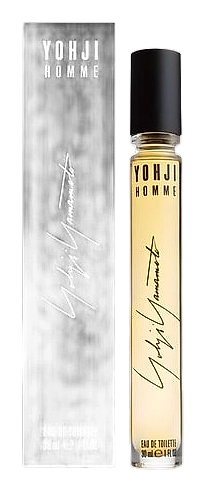
In 2013, Yohji Yamamoto and perfumer Olivier Pescheux revisited the house's masculine identity through a new lens. Yohji Homme had first arrived in 1999, but the 2013 release represented a recalibration, keeping what worked, sharpening what didn't, building a fragrance for a different decade of the same wearer. The brief was aromatic-woody with a twist: the house wanted warmth without softness, spice without aggression. The answer was licorice, not as a gimmick, but as structural counterweight. It gives the composition something to argue against.
The herb and spice foundation (sage, juniper, cardamom) provides the architecture. Licorice provides the tension. Without it, the top would read as straightforward aromatic, pleasant, forgettable. With it, the opening becomes a question: green and sweet and just slightly off. The heart amplifies the contradiction. Rum and coffee are warm in the way a lit room is warm, not cozy, but deliberate. Geranium keeps the middle from becoming gourmand, its green-metal edge reminding you that this was made by the same hands that cut fabric into shapes no one had seen before.
The evolution
The opening hits aromatic and stays there for the first ten minutes, sage dominant, juniper lifting, bergamot brightening the edges. Then the sweetness moves in. Licorice becomes the transition agent, pulling the composition from green-spice into something warmer. By the second hour, coffee and rum are doing the work. The geranium fades but doesn't disappear, it lingers in the background, keeping the sweetness from going flat. The base arrives quietly: cedar and leather emerge together, patchouli adding depth, musk smoothing everything into an intimate close. On skin, expect 6-8 hours. On fabric, the cedar-leather accord can still be detected the next morning. The coffee note is the through-line, it opens with the spices and stays through the drydown, eventually settling into something quiet and almost imperceptible. What remains hours later is a warm, dry trace: leather, wood, and a ghost of sweetness. The kind of presence that registers in the room after you've left it.
Cultural impact
The 2013 reformulation of Yohji Homme arrived during a period when niche and fashion-house fragrances were gaining ground among men who wanted something beyond the mainstream. The combination of aromatic herbs, warm spices, and dark coffee notes positioned it as an alternative to louder, sweeter masculine releases of the same era. It's the kind of fragrance that doesn't announce itself, it registers later, in the memory of the person who wore it. For those who discovered the original 1999 release and the 2013 reformulation, it represents a consistent vision: aromatic-woody with an unexpected sweetness that keeps it from feeling austere.