The Story
Why it exists.
The beginning
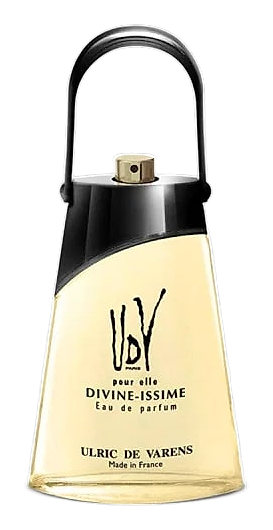
Divine Issime arrived in 2013 as Ulric de Varens' statement on what a woman projects when she walks into a room. The brand built its catalog on accessibility, quality fragrance without the gatekeeping, and this scent was its answer to the idea that gourmand florals had to be soft. The name itself carries that intent: 'Divine' is not a modest word. Neither is the composition. Jasmine, orange blossom, and tuberose open together, not sequentially, creating an immediate white floral density that doesn't wait for permission. Beneath that, patchouli roots the florals in something earthy and grounded rather than powdery. It's a fragrance that understood, even in 2013, that confidence and sensuality weren't opposite ends of a spectrum, they were the same thing, worn loudly.
What makes Divine Issime structurally interesting is the way the top accord holds its ground longer than expected. Most white floral fragrances use jasmine or tuberose as a bright, showy opening, then surrendered to the heart. Here, the top notes of jasmine, orange blossom, and tuberose arrive simultaneously and stay present through the heart phase, layered rather than replaced. The tonka bean in the heart doesn't dilute the florals, it sweetens the air around them, creating the effect of warmth radiating from skin rather than perfume applied to it. Patchouli in the top accord is the unusual move: it gives the opening an earthy counterweight that prevents the white florals from reading as purely decorative.
The evolution
The opening hits with a three-note chorus, jasmine, orange blossom, tuberose, arriving together in a creamy white floral swell that fills the space immediately around the wearer. Patchouli arrives within minutes, adding an earthy undertone that prevents the florals from reading as delicate. This phase lasts roughly 45 minutes before the tonka bean begins to assert itself in the heart. The pink pepper appears as a subtle lift, not heat, but elevation, a spice that catches light rather than burns. By the second hour, the florals have not disappeared. They are still there, just softened by the growing warmth of tonka bean and vanilla. The drydown belongs entirely to vanilla and tonka bean, a sweet creaminess that stays close to the skin for the remaining hours. Sillage sits in a moderate, intimate range throughout, respected by enthusiasts who appreciate its restraint over projection. The next morning, a faint warmth remains on pulse points, vanilla without the florals, quieter but still present.
Cultural impact
Divine Issime arrived at a moment when accessible luxury perfumery was gaining momentum, offering an alternative to the high-commitment niche market that had dominated the preceding decade. Ulric de Varens built its catalog on the premise that sophisticated fragrance did not require intimidating price tags or exclusive distribution, and this release embodied that philosophy directly. The gourmand floral trend that defined much of the 2010s found a quiet champion in this scent, standing apart from the louder, sweeter entries that saturated the market. It earned a loyal following among enthusiasts who appreciated its confident white floral opening paired with an unpretentious drydown that felt wearable rather than performative.