
The Story
Why it exists.
The beginning
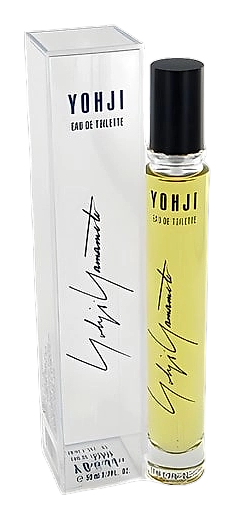
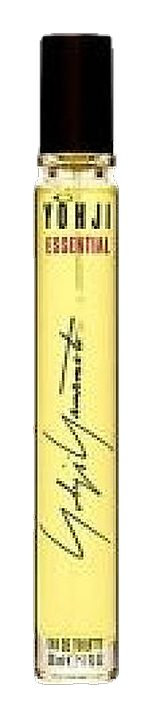
Yohji Yamamoto founded his Tokyo house on the principle that clothing should not announce itself, that structure and silence are as powerful as ornament. When he approached Jean-Michel Duriez to create a fragrance, the brief was implicit: find the irreducible core, the scent equivalent of a perfectly draped black coat. Duriez, working from his mastery of French luxury perfumery, translated this into a fragrance built around subtraction and clarity. Yohji Essential launched in 1998 as a statement of purpose, and the 2013 edition reaffirmed the same ethos, the name serving as both label and manifesto.
The note philosophy here reflects the same discipline visible in Yohji's collections. Chamomile and galbanum were chosen not for their popularity but for their structural properties, green and bitter in a way that creates tension against the sweeter elements. The floral heart was composed to avoid cliché, using linden blossom as an unexpected thread rather than relying on overused heart notes. The drydown prioritizes depth over projection, moss and labdanum chosen for their ability to age gracefully on skin rather than announce themselves from across a room.
The evolution
The opening act is deliberately unsettling in its restraint, a green-bitter-galbanum assault softened by chamomile's metallic sweetness and grapefruit's tart citrus bite. Clove introduces a spice that keeps the top from feeling purely clean, and gardenia rounds the sharpness into something more complex. As the heart emerges, rose and jasmine take command with lush, velvety depth. Ylang-ylang thickens the floral density while linden blossom introduces a honeyed note that feels almost pollen-dusted. The drydown shifts the narrative entirely. Moss and patchouli create a damp, earthy foundation that evokes rain-soaked wood and forest floor. Labdanum adds a warm resinous amber quality and musk keeps the base Intimate, close to the skin, the olfactory equivalent of a garment that fits perfectly without being noticed.
Cultural impact
Yohji Essential occupies a distinctive niche. In 1998, the fragrance market favored melon, aquatic, and clean-fresh orientals. This composition offered something different, a woody-green-floral structure built on chamomile and galbanum, unconventional for a feminine fragrance at the time. The chamomile gives it a bitter, herbal quality that reads more as intentional than trendy. Moderate sillage keeps it from overwhelming, and the 8-10 hour longevity makes it a workhorse rather than a showpiece. It never became a bestseller. That restraint is part of its appeal.