
The Story
Why it exists.
The beginning
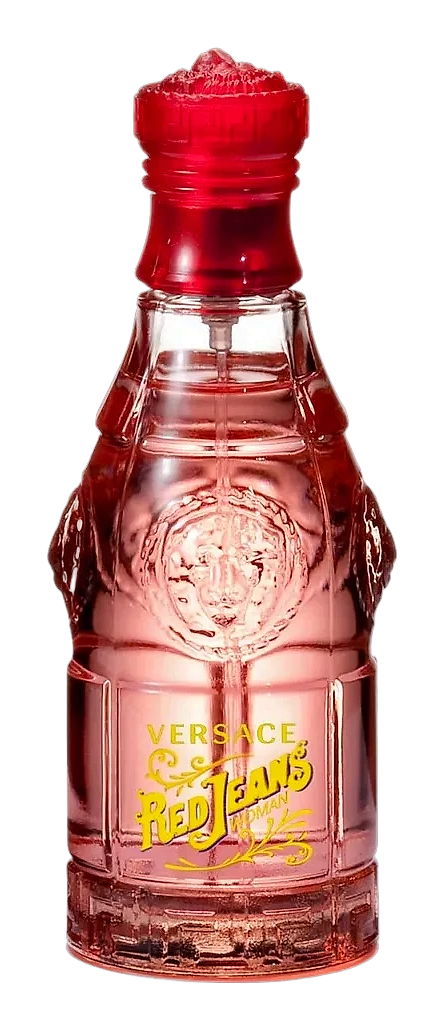
Versace released Red Jeans in 1994 as a counterpoint to its own theatrical excess. The fashion house was known for spectacle, bold prints, plunging necklines, the Medusa head as a symbol of inescapable glamour. Red Jeans was something else. Lighter. Younger. A fragrance that didn't need a runway to make its entrance. Perfumer Jean-Pierre Béthouart built something that didn't try to outlast the party, it tried to be the party. Peach and apricot up front, then the florals take over. Rose, violet, lily of the valley. Clean, confident, and just sweet enough to be memorable.
What makes Red Jeans unusual is the way the powdery notes don't sit on top, they integrate. The violet doesn't just smell pretty; it adds a slightly waxy, lipstick-adjacent quality that gives the heart a specific femininity. Freesia brings a crispness that keeps the sweetness from flattening. Water lily keeps things dewy and light. It's a composition that knew exactly what it was: a 90s floral that didn't need to prove anything.
The evolution
The opening is bright stone fruit, peach and apricot in near equal measure, with blackcurrant lending a tart undertone that stops the sweetness from being one-note. Within twenty minutes the freesia announces itself, and the florals begin their slow takeover. The heart is where Red Jeans becomes itself: violet asserting itself with that slightly powdery, almost waxy quality, rose keeping it soft, lily of the valley adding a green clarity. The drydown is where it earns its reputation. Musk, vanilla, sandalwood, warm and close to the skin. Not a room-filler. A skin-warmth. The kind of fragrance that stays on a jacket collar, in a sunlit room, long after you've left.
Cultural impact
Red Jeans launched in 1997 as Versace's youthful counterpoint to their opulent signature scents. The fragrance captured the carefree spirit of 90s youth culture, becoming a staple in European high schools and college campuses. Its accessible price point and bright, fruity character made designer fragrance ownership feel attainable for a generation that equated scent with self-expression. The name itself, a casual reference to casual American fashion, signaled a shift toward democratized luxury in perfumery.