The Story
Why it exists.
The beginning
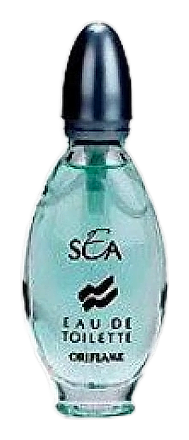
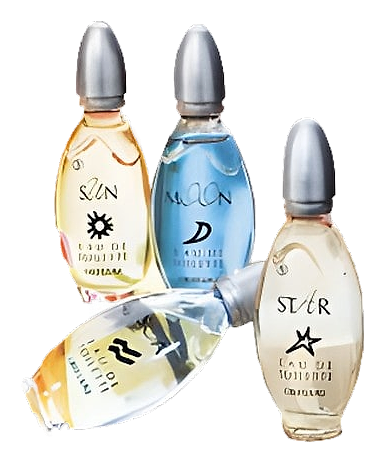
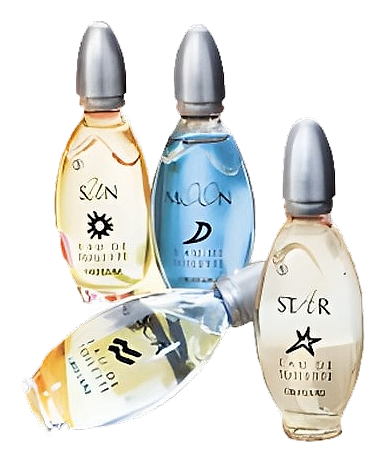
Moon arrived in 1996 as part of Oriflame's Sea, Sun, Moon and Star collection, a four-fragrance lineup released together that year, each designed to capture a different hour or mood. Of the four, Moon was positioned as the mysterious one. Not dark exactly, but elusive. The kind of fragrance that arrives without announcement and stays past its welcome in the best possible way. The brief was simple: citrus that cools, florals that comfort, a base that lingers. What the perfumer delivered was more nuanced. The cyclamen in the opening adds a green, almost dewy quality that keeps the citrus from feeling like a department store default. The heart is straightforward, rose and jasmine, the vocabulary of approachable femininity. But the orris root in the base gives it backbone. Powdery, slightly earthy, the kind of note that used to anchor the fragrances women wore to feel put-together, not to impress anyone else.
What makes Moon's structure interesting is how the orris root and white musk work together in the base. Orris, the aged, powdered form of iris root, is expensive and time-consuming to produce, requiring years of drying before it develops its characteristic violet-powder scent. The combination creates a slightly earthy, sophisticated quality that lifts the whole composition above standard powdery-floral territory. The cyclamen note is also worth noting. It sits between citrus and floral, contributing a watery, green quality that keeps the opening from reading as purely sharp.
The evolution
The opening hits with bergamot and lime, bright, immediate, a little startling. The cyclamen softens the citrus edge almost immediately, adding a watery green quality that keeps the start from feeling like a chemical burst. For the first thirty minutes, this is crisp and cool. A morning fragrance, almost. The hand-off to the heart is gradual. Rose and jasmine arrive quietly, not announcing themselves, settling in alongside the cooling citrus until the whole composition reads as a single soft impression. The jasmine keeps it from becoming too precious. The rose keeps it from becoming too modern. By hour two, the florals are running the show. The drydown is where Moon earns its name. Orris root brings a powdery, iris-like elegance that cools everything down again, but differently this time. Warmer. The white musk holds it close to the skin, intimate and clean. What surprises is how long the citrus presence lingers beneath the florals, not disappearing but integrating, becoming part of the background warmth rather than the foreground statement.
Cultural impact
Moon presents a fragrance that prioritizes clarity and balance, allowing each note to be perceived distinctly without overwhelming the senses. The composition centers on bright citrus elements that open the experience with immediate freshness, while warmer undertones add depth and prevent the scent from feeling one-dimensional. Cardamom contributes a subtle spiciness that provides intrigue without aggression, creating an interesting tension with the cleaner top notes. The overall effect is a fragrance that feels considered and intentional, offering a thoughtful alternative to more assertive compositions.