
The Story
Why it exists.
The beginning
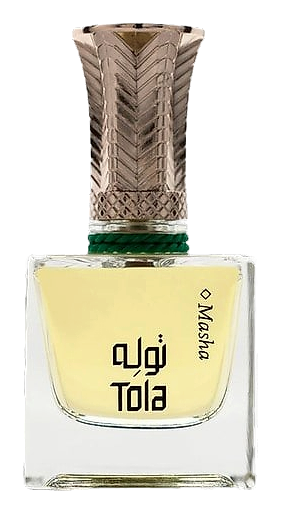
Masha takes its name from a traditional unit of weight used across South Asia and the Gulf, a measure of precision, of value, of worth. In the hands of Dhaher Bin Dhaher, that name became a philosophy: pack a fragrance with so much that each wearing reveals something new. The perfumer built Masha around abundance, fourteen distinct top notes creating a wave of fruit and citrus, then a base of leather, oud, and animalic material dense enough to anchor everything that came before. The structure is confrontational by design. Dhaher wasn't interested in a safe composition. He wanted a fragrance that measured something, not just weight, but intention. Each wearing of Masha asks what you're willing to carry.
The opening is where most people decide. Stone fruits, plum, peach, tumble alongside tropical pineapple and red berries. It's a basket of sweetness that could easily tip into confection. But there's a tension here: the galbanum and birch leaf keep the sweetness grounded, slightly green, almost mineral. Black pepper threads through to lift the fruit without cooling it. What follows is the heart's strange pivot. The jasmine, magnolia, and iris introduce a cool, almost aquatic quality, a quiet counterpoint to everything warm that came before. Mugwort and artemisia add an aromatic bitterness that most wearers don't expect. By the time coffee arrives, the fragrance has already refused to be one thing.
The evolution
The top notes hold for the first hour. Unusually long. Plum and pineapple dominate, with citrus dancing at the edges, bergamot, grapefruit, lemon in shifting ratios depending on your skin. Black pepper and mint keep the sweetness from sitting still. There's a moment around the 45-minute mark when the strawberry surges, fleeting, bright, then gone. Then the florals take over. Jasmine, rose, iris, cool and translucent, almost detached from the richness below. The cardamom and coffee in the heart start to push through, creating a friction between warmth and coolness that resolves nothing. The drydown is where this fragrance earns its name. The castoreum arrives first, raw, animalic, close. Civet follows. Leather asserts itself, bold and unapologetic. Oud and sandalwood add smoke and cream. Vetiver keeps the earthiness honest. Vanilla and tonka bean do their best to soften, but the animalic notes don't disappear. They deepen.
Cultural impact
Tola emerged in 2013 as part of a wave of Gulf-based niche houses reclaiming regional perfumery traditions for a global audience. Masha arrived alongside four other debut fragrances, establishing the house's signature approach of layering traditional Arabic ingredients with modern structure. The frank use of castoreum and civet in the formula reflects Gulf perfumery's historical openness to animalic materials, a contrast to Western reformulation trends. As Gulf niche gained international collector attention, Masha became a reference point for bold oriental authenticity versus commercially softened interpretations.