The Story
Why it exists.
The beginning
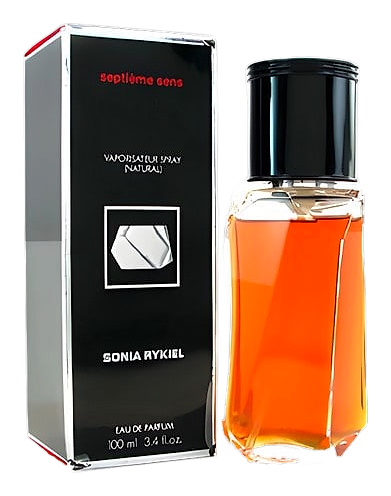
Septième Sens arrived in 1979 as the house's first fragrance, translating the Rykiel aesthetic into scent. The name means seventh sense, something beyond the five ordinary senses and the sixth of intuition. A provocation and a promise. From the first spray, the fragrance announces itself differently, not with the bright fanfare of conventional florals but with a quiet insistence that invites the wearer closer. aldehydes provide a waxy, luminous quality that catches the light differently than expected, while plum lends a dark sweetness that borders on the fermented. This opening is neither pretty nor aggressive, simply present in a way that demands acknowledgment.
What makes Septième Sens distinctive is its refusal to resolve. The aldehydes give it that immediate shimmer, bright, lifted, almost champagne, but they're not the point. They're the curtain rising. Underneath, plum and peach arrive with a darkness that isn't quite sweet. Almost wine-like. Bergamot keeps the top lifted, but the base is already reaching up. The florals don't bloom gently. They arrive with weight, carnation's spice, ylang-ylang's tropical cream, jasmine's intoxicating heat. White honey adds a sticky sweetness that could tip into gourmand if the animalic notes weren't holding it down. And they are. Civet and castoreum are not background players here.
The evolution
The aldehydes hit first, that signature waxy shimmer, bright and immediate. Bergamot adds a citrus edge, but it's plum that dominates the opening, dark and almost fermented. The aldehydes don't disappear so much as dissolve into the fruit, becoming part of the sweetness rather than separate from it. Then the florals arrive. Carnation brings warmth. Jasmine adds depth. Ylang-ylang contributes cream. White honey is the surprise here, not the clean honey of beeswax but something stickier, more intimate. The animalic notes begin their slow emergence, civet and castoreum arriving not as a wall but as a gradual thickening of the air. By the drydown, the animalic has taken over. Civet and castoreum anchor everything, with oakmoss providing that classic chypre structure and patchouli adding earth. The honey lingers, never fully disappearing. Amber and sandalwood warm the finish.
Cultural impact
Septième Sens operates in dark, animalic territory, unwilling to be categorized as pretty. It remains divisive precisely because it refuses to be safe. For those who connect with it, the fragrance offers something rare in designer perfumery: genuine character that doesn't rely on trend or marketing narrative. The composition demands attention through its boldness rather than its beauty, by the insistent presence of honey and animalic notes that grow closer and more intimate over hours of wear.