The Story
Why it exists.
The beginning
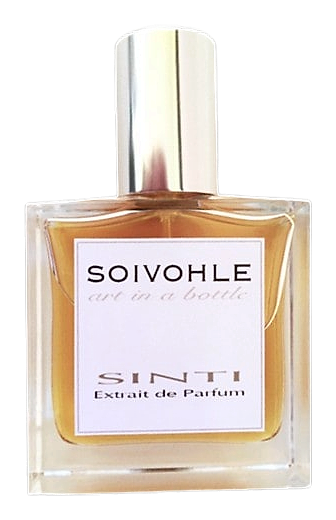
Sinti takes its character from a defined set of materials working against each other. Zorn launched Soivohle in 2002, and Sinti arrived in 2003 as one of the house's early compositions, a rose fragrance built around a clear concept. The stated direction was Centifolia Rose, Green, Alpine, and the scent holds to that triangulation. Zorn built it around Rosa centifolia absolute, Rose Absolute, and Rose Otto, then set them against galbanum's sharp green snap and pine needle's cold resin. The goal was not prettiness in any conventional sense. The composition treats rose as a material with weight and edge, paired with green and resin notes that refuse to let the florals settle into softness.
The interesting move here is structural. Galbanum is a resin known for its sharp, bitter green character, a material that can dominate an opening if left unchecked. Pairing it with centifolia rose, one of the most opulent florals in the palette, creates a real risk of collapse into either soap or syrup. Zorn holds the line by letting the fir and balsam do bridging work between the two poles. Pine needle cools the galbanum, taking some of its raw edge and replacing it with a colder, more resinous green.
The evolution
On skin, the first ten minutes are mostly green. Galbanum and fir land sharp and cold, almost like snapped stems, with a thread of pine resin that smells more like walking into a forest than smelling a candle. This is the green register at the top of the brief, lived in. The clary sage adds a herbal edge that keeps it from smelling synthetic or overly clean. Around the 20-minute mark, the rose begins to surface. It doesn't bloom so much as push through the green, centifolia absolute opening with a honeyed, almost jam-like warmth while the otto brings the peppery, metallic facets roses have when they're cut from the stem. Blueberry shows up as a quiet accent, dark and rounded, less fruit than stained skin. By the two-hour mark, the green has mostly stepped back.
Cultural impact
Sinti sits within the category of indie rose fragrances that treat the note as something to be worked with rather than smoothed over. The composition holds to a specific path: a green-rose hybrid that resists easy categorization. Wearers describe it as something pulled from a specific place, less perfume than environment, and the brief confirms that intention. Centifolia Rose, Green, and Alpine are stated as the core directions, and the scent holds to that triangulation without compromise.