The Story
Why it exists.
The beginning
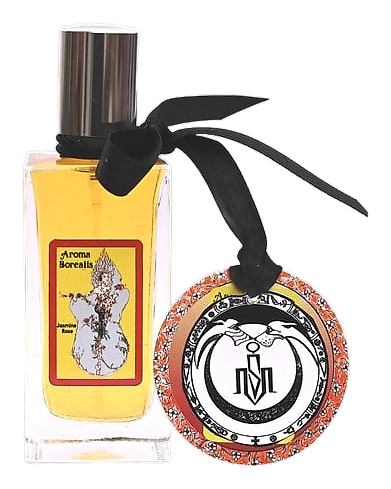
Aroma Borealis launched in 2018, created by perfumer Andrea Byrne, who set out to build the olfactory signature of a real rose you'd actually smell outdoors, stems and soil and the green hum of leaves included, not the polished single-note abstraction that dominates perfumery shelves. Byrne wanted the rose as it grows, alive in its garden, rather than the flower as it sits in a vase. It's a composition built on accords that read as white floral, citrus, powdery, rose, fruity, animalic, leather, floral, woody, and musky all at once, a layering that refuses to collapse into a tidy category. The brief is botanical and rooted in observation, and that shapes everything that follows.
What makes the structure unusual is the rose overload. Three rose expressions share the heart: Rose de Mai, Damask Rose, and the straight rose that opens the composition. Rather than competing, they triangulate, each one catching a different facet of the flower's character. Add jasmine and lily on top and the heart becomes dense with white floral weight, almost greenhouse-thick in its humidity. Then tea and violet pull the temperature down before plum, leather, and amber pull it back up. It's a rose composition that refuses to behave like one.
The evolution
The first ten minutes are almost disorienting: grapefruit and mandarin, sharper than expected, cut through with rose before anything soft has a chance to settle. It reads bright, almost citrus-forward, which misrepresents what follows. Within thirty minutes the jasmine arrives, pulling saffron and mimosa up with it, and the composition darkens considerably. Tea and violet leaf step in around the hour mark, and the warmth gets serious. Plum and leather take over by hour two, with tuberose threading through like a slow pulse. Sandalwood, amber, and vanilla form the floor, and that's where things stay. On skin the late drydown is quieter, a skin-scent of warm sandalwood and the ghost of tuberose, the kind of intimate presence that settles close to the body rather than announcing itself across a room.
Cultural impact
Aroma Borealis released in 2018 under the hand of Andrea Byrne, and its garden-rose concept, stems and green leaf included, stood as a deliberate counterpoint to the more abstract florals that had been gaining ground in niche perfumery. Rather than reducing the rose to a single polished motif, Byrne built the composition around the full sensory experience of an actual living flower in its garden setting, and that commitment to botanical realism gave the release a distinct identity.