
The Story
Why it exists.
The beginning
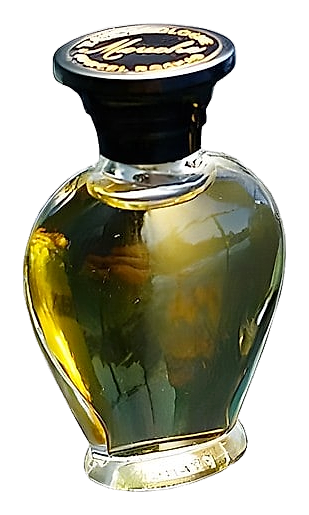
Mousseline arrived in 1946 from Edmond Roudnitska, working under the Rochas couture house that Marcel Rochas built in Paris a generation earlier. The name means mousseline, that thin, nearly translucent silk used in couture. Roudnitska built this fragrance as a counterpoint to the bolder Femme, which Rochas launched a few years prior. Where Femme announced itself, Mousseline suggested. The aldehydic opening was a signature of the era, but Roudnitska gave it a green cut, violet leaf, a sharp citrus, a carnation spice, that kept the warmth from becoming decorative. It was designed for a woman who wanted presence without volume.
The aldehydic structure is what makes Mousseline endure on skin. Those carbon-chain molecules create a waxy, effervescent quality that amplifies everything around them, they lift the orange blossom, sharpen the violet leaf, extend the carnation's warmth into something that outlasts most modern compositions. The plum Taif rose heart is a deliberate fleshy sweetness that softens the aldehydic brightness without erasing it. This isn't the aldehydes fading into the drydown, it's the aldehydes transforming it, becoming part of the powder rather than disappearing from it. The classic chypre base of patchouli, labdanum, and oakmoss anchors everything in that earthy, mossy foundation that defines the style.
The evolution
The opening is all aldehydes, bright, waxy, almost metallic. Cold air on warm skin. Within minutes, violet leaf arrives with a green snap that cuts the brightness, followed by bergamot citrus and orange blossom softening everything from the edges. Carnation and clove emerge in the transition, warming the aldehydic sharpness into something that feels deliberate rather than accidental. By the heart phase, the aldehydes settle into powdery softness. Plum and Taif rose bring a dark, jammy sweetness that tempers the green sharpness, while jasmine and orris add complexity. Mimosa gives a powdery, honeyed softness. Lavender introduces a cooler, more aromatic character that creates an interesting tension with the warm spice. The drydown is where Mousseline earns its name. Patchouli, labdanum, and oakmoss form a classic chypre base, earthy, mossy, slightly resinous. The aldehydes never fully disappear. They linger in the base as powdery warmth, softened by musk and sandalwood, holding close to the skin for hours.
Cultural impact
Mousseline represents classic French perfumery from the golden age of chypre and aldehydic compositions. As a Roudnitska creation for a major Parisian couture house, it occupies the same rarefied territory as Femme, perfumes that defined what feminine elegance meant for a generation. The aldehydic green-spicy character feels increasingly distinct in a modern market dominated by lighter, fresher profiles.