
The Story
Why it exists.
The beginning
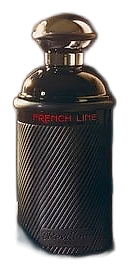
French Line arrived in 1984. The name carries a certain weight, though its exact inspiration isn't documented in available sources. Revillon, the house behind this fragrance, had established itself in the world of luxury goods. French Line presents an aromatic structure built to hold, with careful attention to how the notes develop and settle together. The composition works quietly, without announcement, letting the interplay of elements speak for itself. There's a confidence in its construction, the kind that doesn't require explanation. The fragrance trusts the wearer to discover its layers gradually, and rewards that patience with a complexity that reveals itself over hours rather than moments.
What makes French Line unusual is its base. Coconut rarely appears alongside leather in masculine compositions, it skews tropical, almost sunscreen. But here it reads differently: warm, skin-close, a counterweight to patchouli's earth. The carnation in the heart adds a spiced warmth that bridges the fresh opening and the leathery drydown. It's a structure that requires all three phases to make sense; remove any one and the composition tilts.
The evolution
The opening hits sharp, bergamot, lemon, coriander, and basil arriving together in a burst of green-citrus clarity. Artemisia adds that faintly medicinal edge common to 1980s masculines. The citrus eventually recedes and the heart takes over: rose and jasmine in a soft, powdery bloom, carnation providing warmth and spice. The transition isn't dramatic, it broadens. The floral heart lingers before giving way to the base. Then the base arrives: patchouli and leather first, the coconut emerging later to soften the leather's bite. The drydown settles close to the skin, with projection that stays within comfortable bounds. Longevity proves genuine, lasting well into the next day. The next morning: patchouli, faintly sweet, still there. The carnation warmth that marked the heart persists as a subtle undertone, threading through the patchouli in a way that keeps the drydown from feeling heavy.
Cultural impact
French Line belongs to a particular moment in masculine perfumery, 1984, when aromatic chypres defined the masculine vocabulary of the time. It shares certain characteristics with the great masculines of that era, though its coconut-leather drydown gives it a signature all its own. The drydown is what separates it from the pack, that unexpected tropical softness cutting through the expected leather and patchouli in a way that lingers in the memory. Wearers who appreciate it tend to describe it as understated, and that's not faint praise.