The Story
Why it exists.
The beginning
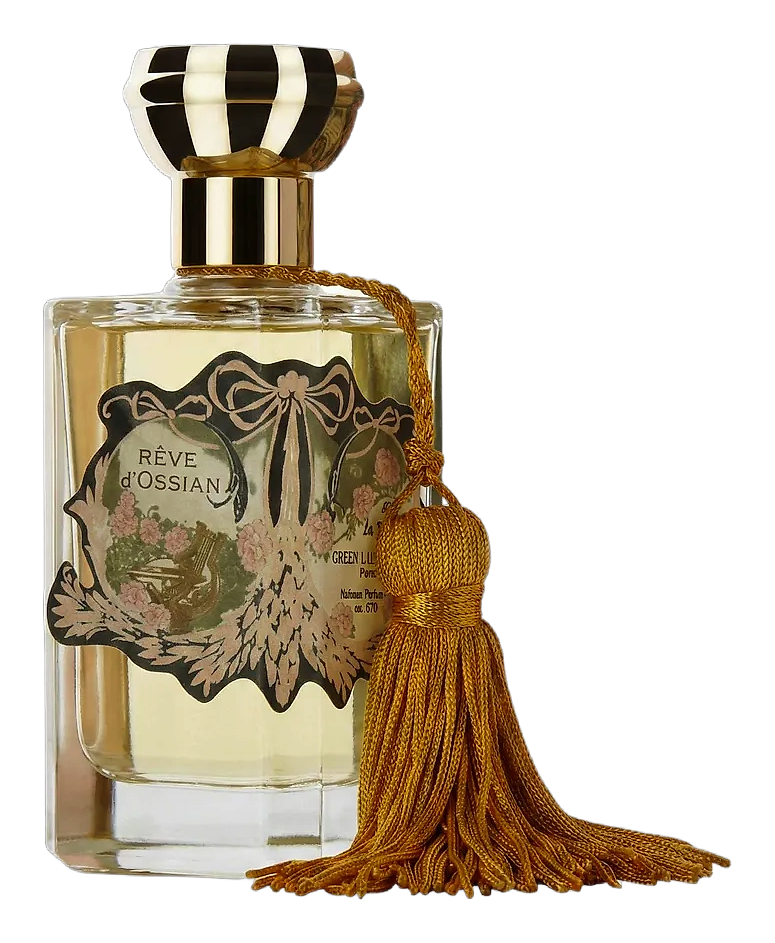
Rêve d’Ossian was first composed in 1900, a period when the house had already been translating olfactory tradition into wearable art for nearly two centuries. The name carries a specific literary weight: Ossian, the invented Celtic bard whose fabricated verses Napoleon called ‘the finest works of genius,’ shaped an entire European aesthetic. Painters painted him. Composers set him to music. And Oriza L. Legrand made him into resin and pine.
The genius of the name is what it doesn’t say outright. No heavy-handed historical reference, no ‘inspired by’ declaration. Just a name that implies a vast, cool, romantic landscape, fog on highland moors, heroic figures from another age, poetry that shaped itself around the emotional truth of things rather than literal fact. The fragrance earns that reference through its materials. Pine speaks to the northern forest. Frankincense speaks to ritual and antiquity. Everything else, the benzoin, the resin, the woods, speaks to warmth and shelter.
The evolution
This is a slow-burn fragrance in the truest sense. It doesn’t arrive at the door with presentation. It arrives at the door and waits for the room to notice. The first hour is a slow unveiling: the pine and frankincense open together, neither timid, committing to a smoke-dry incense that smells serious, austere, almost ecclesiastical. By the second hour, the benzoin starts to soften the edges, drawing the smoke in toward skin instead of atmospheric space. The cinnamon warms without announcing itself. The elemi adds a pine-lemon brightness that stops the composition from going entirely dark. At hour three, the guaiac wood threads in with its own smoky, vanilla-adjacent warmth.
Cultural impact
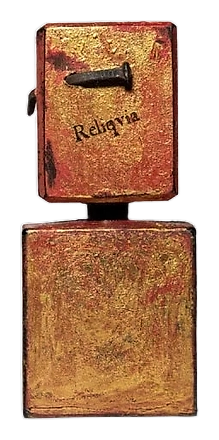
Rêve d’Ossian is among the maison’s most celebrated works, and the incense-forward character has become a defining expression for the house. Reviewers describe it as ‘a cathedral in a bottle’, evangelical about its resinous, smoky depth and its capacity to evoke ancient atmospheres. Several comparable fragrances circulate in enthusiast circles, including Avignon by Comme des Garçons and Reliqvia by Filippo Sorcinelli, both of which share the incense-resinous orientation but diverge in character. Avignon tends toward the austere and clinical; Rêve d’Ossian leans into warmth and Oriental depth. Encens Roi by Histoires de Parfums occupies adjacent territory.