The Story
Why it exists.
The beginning
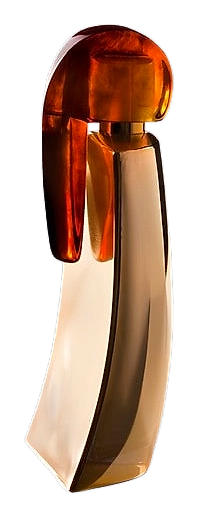
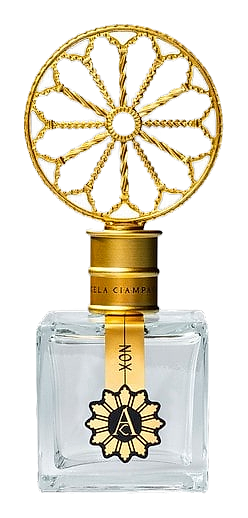
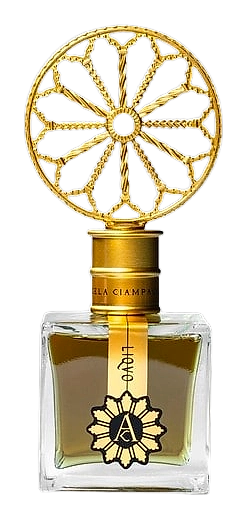
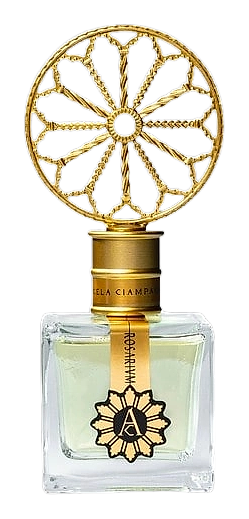
Rosarium takes its name from the rosary, but also from a rose garden, which tells you everything about where this fragrance lives: between devotion and desire. Angela Ciampagna designed it as an extrait de parfum in 2015, the year the Hatria collection arrived. The brief was simple on paper: play between the sacred and the profane. In practice, the fragrance opens with incense, smoke curling from something burning in reverence, then deepens into iris, the warm dusty root that carries the memory of skin, the sensation of something lingering after prayer ends.
What makes Rosarium unusual is the carrot seed and celery seed in the heart. These are not common fragrance materials. Carrot seed brings an earthy, slightly oxidised quality, the smell of roots pulled from soil, while celery seed adds a bitter green undertone that keeps the violet from becoming too precious. The juniper berries add a faint gin-like lift. Together, these materials prevent the composition from settling into a straightforward incense floral. Instead, the fragrance feels grounded, rooted in something raw and organic beneath its layered surface.
The evolution
Incense opens the composition, not the sweet kind, the kind that bites slightly, that makes your eyes water in a good way. Honey softens the entry but doesn't sweeten it; this is honey as beeswax, honey as something older than dessert. Violet pushes through, joined by iris and carrot seed, dusty, buttery, with a root-vegetable earthiness that keeps the floral grounded. Juniper and celery seeds lift the middle slightly, adding a green sharpness that prevents the composition from becoming heavy. Incense retreats and vanilla arrives, not as dessert but as warmth, skin-warmth, the temperature of a room after everyone has left. Cedar and vetiver form the base architecture. Musk stays close. The drydown is intimate by design: this is a fragrance that wants to be discovered, not announced.
Cultural impact
Rosarium has found its audience among collectors who seek out niche incense florals that don't resolve into safe territory. It sits alongside compositions that use incense as a starting point rather than an endpoint. The Hatria collection, of which Rosarium is part, represents a body of work that treats fragrance as an artistic medium. Wearers describe it as the scent of someone who doesn't need to announce themselves, quiet by design, memorable in practice. The fragrance continues to resonate with those who appreciate compositions that reward patient attention rather than immediate impact.