The Story
Why it exists.
The beginning
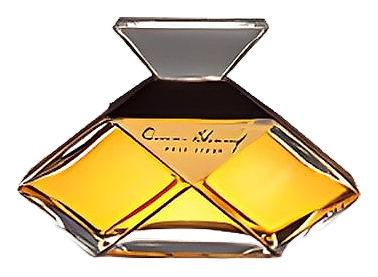
Francoise Caron created Pour Femme in 1990, and the brief wrote itself: translate Omar Sharif's screen presence into something a woman could wear. Intensity. Warmth. The weight of a meaningful look. No celebrity fragrance fluff, this was about capturing the actor's cinematic gravitas through one woman's fragrance. The house had already proven with its 1992 masculine counterpart that it wasn't interested in playing safe. Pour Femme arrived to extend that philosophy into floral territory, and Caron didn't soften the edges. She leaned into them.
The heart of this fragrance is where the argument lives. Tuberose, jasmine, ylang-ylang, that's a triple threat of white florals that could easily tip into caricature. The narcissus and orris root keep it grounded with a green, slightly powdery complexity that saves it from pure opulence. Palisander rosewood in the opening isn't common, and it gives the bergamot and orange blossom something woody and warm to lean against rather than the typical sharp citrus ride. The composition has real conviction, this isn't a fragrance designed to be inoffensive.
The evolution
The opening hits quickly: bergamot and orange blossom, bright and aromatic. The Palisander rosewood adds an unexpected warmth almost immediately. Green notes lift everything for about thirty minutes before the hand-off to the heart begins. Then the florals take over. Tuberose dominates, thick, lactonic, slightly animalic. Jasmine swells alongside it. The ylang-ylang gives everything a tropical weight. This phase lasts a few hours. Slowly, the sandalwood and amber emerge as the florals recede. Musk stays closest to the skin. The drydown is intimate, warm, and lasts 4-6 hours on most. By the next morning, a faint warmth remains, skin-plus, not perfume-plus.
Cultural impact
Pour Femme landed in 1990 as part of an era when celebrity fragrances were still expected to mean something. The house positioned itself in prestige territory, substantial bottles, cinematic references, compositions with real conviction. Francoise Caron's approach to the white floral heart reflects that era's willingness to let florals perform at full volume. Users describe it as the scent of someone with taste formed before fast fashion, someone who still believes in investing in a few great things. The tuberose-heavy heart draws comparisons to Dior Poison, but the overall character is warmer and less sharp, more romantic drama than shock tactics.