The Story
Why it exists.
The beginning
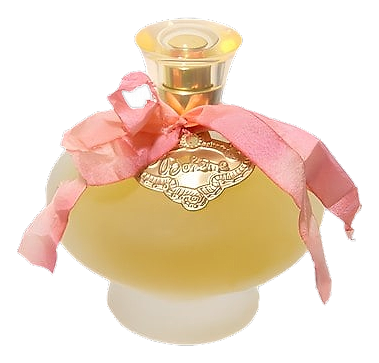
Boheme arrived in 2000 from Dawn Spencer Hurwitz. The composition reads exactly like its brief: chypre architecture built around a heart stuffed with rose, honey, jasmine, and carnation, then weighted down by a base that practically lists every resin in the perfumer's cabinet. There is nothing minimal about it. The formula announces its intentions from the first page, a dense tapestry of materials that refuses to edit itself down to a tidy three-note pyramid. What you have here is a chypre that believes accumulation is a virtue, that more is not just more but more with conviction. Every classic note you'd expect from the genre is present, but pushed beyond polite proportions into something that feels operatic.
What makes the structure unusual is the sheer density of florals at the heart. Eight distinct flowers compete for attention: Bulgarian rose, Egyptian jasmine, lily, lilac, iris, carnation, geranium, and white rose, with honey threaded through as the sweetener. The florals carry the full weight of the composition, with the resins, balsams, and tobacco stepping in to provide the walls and the roof. This is architecture in the literal sense, a blueprint where every element is load-bearing.
The evolution
The first twenty minutes are almost confrontational. Black pepper, galbanum, and lemon hit the skin with a bright, almost metallic crack that smells closer to crushed leaves than perfume. The neroli and rosewood round it slightly, but the opening is built to grab attention, not ease you in. By the second hour, the florals arrive all at once. Bulgarian rose takes the lead, but honey, jasmine, iris, and carnation layer in close behind, creating a dense, almost overripe bouquet that borders on indolic. This is where the chypre structure starts to assert itself. Patchouli and oakmoss creep in underneath the flowers, not as a base note but as a shadow, grounding the sweetness with something green and earthbound. The honey note is the wildcard here.
Cultural impact
Boheme occupies a distinctive place among chypres of its era. It composes with the kind of resin-and-floral density that marks the classical genre, stacking layers rather than stripping them away. Where many contemporary releases pursue transparency, Boheme commits to weight, to moss, to the full-throttle materials that regulatory pressure has made rarer in modern formulas. It wears with presence, the kind of statement that fills a doorway before you walk through it. For those who feel that mainstream perfumery has thinned itself out in pursuit of clean skin scents, Boheme reads as a corrective.