The Story
Why it exists.
The beginning
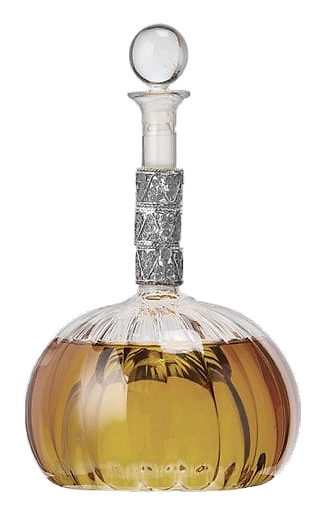
Nobile 1942 named this one for Anna, a woman they describe as strong, proud, and certain of her own horizon. The Estratto version, released in 2011, takes the original Eau de Parfum and pushes every layer deeper. Perfumer Marie Duchêne built it as a portrait in motion: a woman whose mind never stops working, who watches sunrises and reads futures in them, who sweeps rooms behind her without meaning to. The composition mirrors that energy, citrus and bloom at the surface, oakmoss and patchouli at the root. It's not a fragrance built for the shy.
What separates Chypre Estratto from its EDP sibling is the extrait's patience. Citrus leads longer because there's more of it to burn through. The floral accord, tuberose, jasmine, Damask rose, sits on a proper chypre skeleton instead of floating free, so the white-flower sweetness gets anchored by oakmoss and Mysore sandalwood. The base unfolds with the slow certainty the concentration allows, patchouli and amber settling in beneath tonka bean and vanilla, giving the composition a quiet weight that lingers on the skin. The structure is old-school. The proportions are not.
The evolution
The opening behaves like a sunny Italian morning. Bergamot, mandarin, orange blossom, all of it lifted and bright, the citrus catching light before the florals arrive. Then the tuberose steps forward and the temperature changes. Jasmine and Damask rose join it, sweet and slightly narcotic, while benzoin underneath starts to thicken the air, adding a resinous hum that pulls the white flowers downward into something denser. Eventually the florals have pulled back, and what's left is the architecture: Mysore sandalwood, oakmoss, patchouli, amber, tonka bean, vanilla. The chypre spine announces itself without ever raising its voice. Not loud. Unmistakable. Projection and longevity sit comfortably above average, and the scent settles into a soft, mossy drydown that rewards those willing to wait it out.
Cultural impact
Chypre Estratto sits firmly within the classical chypre tradition, the kind of composition that assumes the wearer has some familiarity with oakmoss-driven structure and isn't afraid of it under their florals. It's denser than a typical eau de parfum, warmer than the airy white-floral releases that crowd summer counters, and it leans into its extrait concentration with full-bodied materials rather than restraint. The Mysore sandalwood and oakmoss give it an old-school gravity, while the tuberose, jasmine, and Damask rose keep the heart firmly in the present.