
The Story
Why it exists.
The beginning
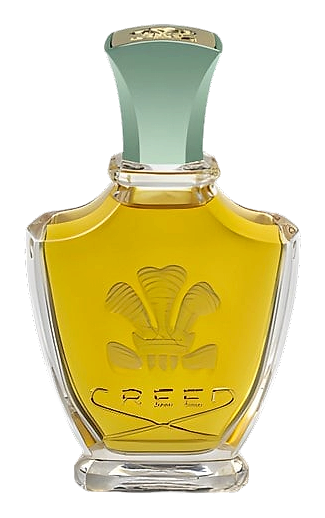
James Henry Creed designed Irisia as an homage to the iris itself, the royal flower at the heart of French heraldry and the fleur-de-lys. The connection runs deeper than symbolism: the iris has been part of the European olfactory landscape for centuries. Released in 1968, the fragrance placed that cool, powdery flower at the center, giving it the space to unfold and reveal all its facets. Creed understood that the iris demanded attention rather than accommodation, and the resulting composition reflects that conviction. The result is a fragrance that lets the iris speak in full sentences rather than fragments.
What makes Irisia unusual is the restraint at its core. Iris is one of the most expensive materials in perfumery, powdery, violet-adjacent, slightly woody, and Creed let it lead rather than season it with brightness. The supporting structure is classical: green florals, a warm amber base, and the oakmoss that defined the chypre family. But the proportion matters. This isn't a chypre that announces itself. It's one that settles in and stays. The composition demonstrates that luxury sometimes means knowing when not to add, letting the rarest materials carry the weight on their own terms.
The evolution
The opening hits bright and citrus-forward, bergamot and mandarin orange carrying a brief flash of green. Then the iris arrives, and with it, a shift in register. Tuberose and Bulgarian rose join, lending richness without sweetness. The violet adds that characteristic powdery lift. As the hours pass, oakmoss settles into the composition, grounding everything in a mossy, slightly earthy character. Sandalwood and cedarwood emerge in the base, with vanilla and musk providing a soft landing that extends the presence on fabric well beyond the initial application.
Cultural impact
Irisia belongs to an era when women's fragrances didn't apologize for presence. It arrived in 1968, at the height of chypre culture, and built its reputation on the idea that powder and moss could coexist with warmth and wood. Decades later, it still attracts wearers who find modern florals too bright, too sweet, or too temporary. The fragrance has outlasted trends, reformulations, and the rise of niche perfumery, remaining relevant not through reinvention, but through stubborn adherence to what it was always meant to be.