The Story
Why it exists.
The beginning
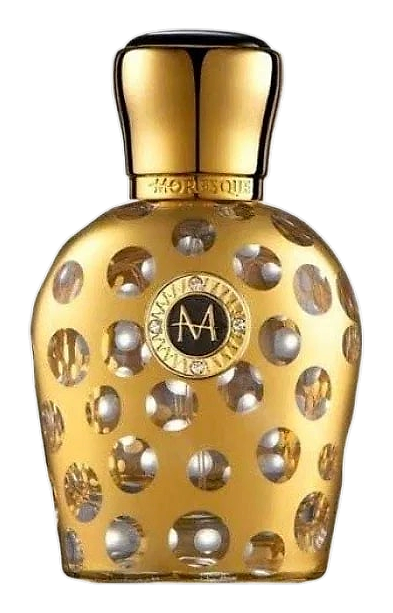
Oroluna arrived in 2016 as part of Moresque's Gold Collection, composed by Andrea Thero Casotti. Casotti built the scent around a Turkish rose that never behaves like a flower. It's framed by smoke and spice from the first spray, anchored by oud and frankincense that refuse to stay background. This is a fragrance designed for someone who wants their rose cut with shadow. The opening hits with a sharp, smoky accord that lingers close to the skin before the Turkish rose surfaces, and even then it arrives laced with ash rather than sweetness. As the hours pass, the oud deepens into something almost mineral, a cool stoniness beneath the warmth of frankincense and labdanum.
What makes Oroluna unusual isn't any single note. It's the structural decision to treat rose as architecture rather than ornament. Turkish rose typically signals romance, softness, a gesture toward femininity. Here it sits inside a cage of cardamom, pink pepper, and grapefruit at the top, then gets compressed further by cedarwood, patchouli, and geranium in the heart. By the time the base arrives with frankincense, labdanum, oakmoss, sandalwood, musk, and oud, the rose has been transformed into something resinous and almost mineral. The smoky and oriental accords listed in its profile aren't accents. They are the whole reason the rose works.
The evolution
The opening is almost confrontational. Cardamom and pink pepper arrive hot, immediately cooled by grapefruit's bitter edge. Turkish rose enters fast, but it doesn't smell like a flower for long. The cedarwood and patchouli take over early, giving the heart a dry, woody bitterness that smells like opening an old wooden chest. The geranium adds a green, almost metallic sharpness that keeps things from going soft. As the composition settles, frankincense and labdanum build a resinous wall that feels both protective and slightly dangerous. The oud arrives quietly, never loud, more suggestion than statement. Oakmoss and sandalwood bring the drydown down to earth, adding a milky, rooty quality that softens the sharper edges without dulling them. What lingers in the final hours is a warm, smoky close: incense, musk, and the ghost of that rose, now fully absorbed into the wood and resin.
Cultural impact
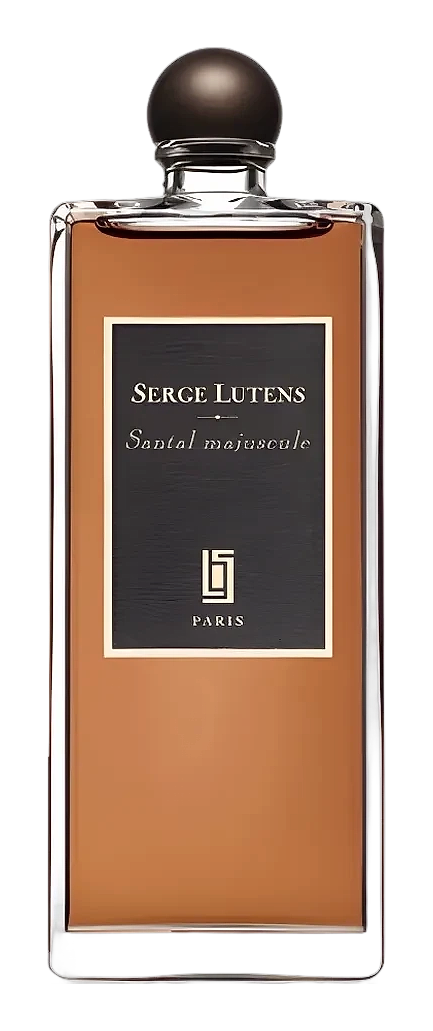
Oroluna occupies a particular lane among rose-forward orientals, one where the flower has been deliberately darkened rather than allowed to bloom bright. Wearers tend to reach for it in cooler weather, when the smoke and resin feel like an answer to the season rather than a challenge to it. It's frequently compared to Kilian's Smoke for the Soul and Serge Lutens' Jeux de Peau, sharing that smoky, resinous territory while holding its own through the Turkish rose's prominence.