The Story
Why it exists.
The beginning
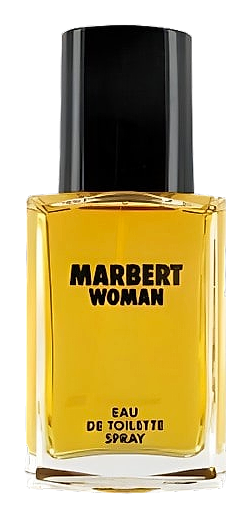
1988. Marbert was Marbert Man, a German men's fragrance line that had built its reputation through the late 1970s and 1980s with practical, reliable compositions. Marbert Woman arrived not as a softening of that identity but as a counterpoint: a classical chypre-floral structured around powdery florals, substantial heart notes, and a base that meant business. The house didn't chase trends. It built what it knew how to build, something that would last on skin and hold its character through a workday. The 1988 release entered a landscape crowded with oriental sweethearts and opted for something cooler, more restrained, with depth that came from the base rather than the sillage. Civet was the choice. Not the safe choice. The interesting one.
What makes Marbert Woman distinctive isn't sweetness, it's the way opoponax and vanilla warm the drydown without sweetening it. Opoponax is resinous, slightly balmy, and it bridges the florals into the base in a way that feels natural rather than constructed. Combined with civet and ambergris, the base becomes something that smells like skin, like warmth, like the hour after you've stopped paying attention to your fragrance and started living in it. Oakmoss gives it the earth. Russian leather gives it structure. This is a complete chypre, powdery, woody, animalic, built the way chypres were built before IFRA started rewriting the rules. The civet isn't a whisper here. It's a statement.
The evolution
The opening announces citrus brightness, bergamot and lemon cutting through the morning, green freshness underneath. Rosewood adds a woody flicker. Fruity notes appear briefly, then recede. Within minutes, the structure begins its shift. The citrus cools. Powdery florals take over, iris rising first, then rose, then the creamy warmth of ylang-ylang and jasmine settling into the composition. Sandalwood and patchouli build quietly in the background, giving the heart its staying power. By hour two, the florals are dominant but the base is already pushing through. The drydown is where Marbert Woman becomes itself. Vanilla and benzoin provide warmth, but civet and ambergris provide character, that animalic musk that sits close to the skin and says something without shouting. Oakmoss grounds it. Russian leather and opoponax add a soft suede warmth that makes the final hours feel intimate and personal. What remains on the skin is warm, powdery, mossy. A classic 1988 chypre that holds its character for hours.
Cultural impact
Marbert Woman arrived in 1988 from a house better known for men's fragrance, a German mass-market brand operating within the Mülehlens group. The composition draws on classical chypre structure, prioritizing powdery florals and a warm, animalic base over the sweeter oriental direction that dominated late-1980s feminine fragrance. Compared to contemporaries like Shalimar or Joop! Femme, Marbert Woman sits cooler and more restrained. The brand's pragmatic philosophy, distinctive without demanding specialized knowledge, defined its mass-market positioning, and Marbert Woman delivered quality fragrance to a broader audience without the luxury markup.