
The Story
Why it exists.
The beginning
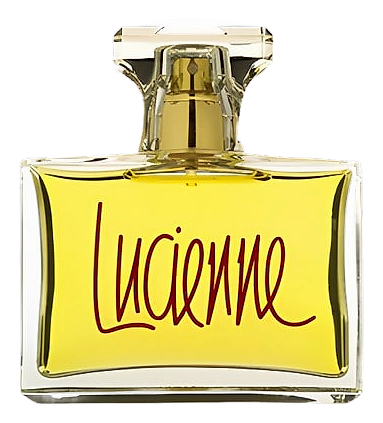
Lucienne began as a ghost. Countess Lucienne Von Doz discovered, in an old trunk, a flacon of a fragrance that had been created exclusively for her mother. The original composition could not simply be recreated by guessing, so the Countess set out to do the only thing that felt right: rebuild it. She sought a perfumer who could honor what the original scent carried, not just its ingredients but its feeling. In 2003, working with Laurent Bruyère, she found her answer. The result was named after no place, no idea. Just her.
What makes the composition unusual is what Bruyère was tasked with doing. He was not inventing from scratch. He was reconstructing something real, a fragrance that already existed and carried its own weight. So the Bulgarian rose, the Indian jasmine, the gardenia and heliotrope are stacked in the classic white-floral manner, dense and layered rather than sheer. There is ginger and Sicilian bergamot on top to give it lift, but underneath, the structure holds a particular gravity, rich and concentrated, built with intention rather than ornament.
The evolution
The first minutes belong to citrus. Sicilian bergamot and lemon cut through the ginger's warmth, sharp and clean, almost cologne-like. Don't get comfortable, because the florals arrive quickly and they bring friends. Bulgarian rose, jasmine, gardenia, lily of the valley, heliotrope, tulip, all of them at once, building into a dense powdery wave that reads like a vintage lipstick compact opened in sunlight. This is the dominant phase, the one that defines the composition's character and holds its ground for the longest stretch of the wear. Then the base settles in: sandalwood and cedar underneath, ambergris lending a warm skin-like hum, vanilla softening everything into a cashmere-musk close. By the time it's gone, what remains is that heliotrope-and-vanilla softness, clinging to scarves and collars like a memory of the person who wore it.
Cultural impact
When Lucienne landed in 2003, it entered a perfume landscape that had moved steadily toward lighter, sheerer constructions, with gourmands and aquatics commanding the spotlight on most counters. Countess Lucienne Von Doz and Laurent Bruyère responded by building something else entirely: a dense white-floral reconstruction, layered and powdery, drawn from a composition that predated current fashion. The fragrance found its audience among those who still valued that older register, the one that asks for concentration and skin warmth rather than projection tricks.