
The Story
Why it exists.
The beginning
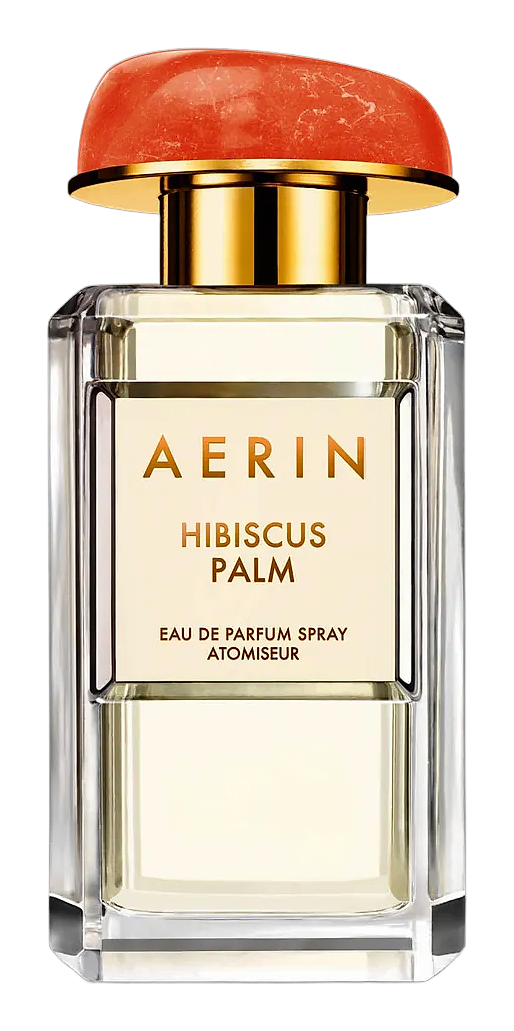
Hibiscus Palm arrived in 2017 as part of Aerin's ongoing project to translate specific atmospheres into scent. Harry Frémont, the perfumer, worked with Aerin Lauder to capture something broader than a single flower, the full sensation of warm island air, lush greenery, and skin that hasn't seen a clock in hours. The brief wasn't 'make a tropical fragrance.' It was 'make someone smell this and feel somewhere.' Palm leaf in the top was the key, a green, almost aquatic counterweight to hibiscus's tropical brightness. The name says hibiscus and palm, but the craft is in the balance between them.
The structure is deceptively simple: bright tropical opening, creamy white-floral heart, lactonic base. But the execution is precise. Ylang-yllang and ginger give the top a clean heat, spice that doesn't announce itself. The heart leans on frangipani's creamy fullness without letting it overtake. The base is coconut milk and vanilla doing what coconut milk and vanilla do best: wrapping everything in warmth that stays close to the skin rather than filling a room. That's the trick. It's tropical without being loud. Warm without being heavy.
The evolution
The opening hits fast, hibiscus and ylang-yllang arriving together, bright and unmistakably tropical. Palm leaf keeps it from becoming sweet too quickly; there's a green, slightly aquatic quality that reads as fresh, not perfumed. Within twenty minutes, frangipani and white flowers move in. The texture shifts from bright to creamy. Coconut milk and vanilla take over by hour two and stay. The ginger doesn't disappear, it settles into the background, a quiet warmth that stops the drydown from becoming flat. What lingers is a skin-close cream: vanilla, faint coconut, something that smells like warm skin. The kind of drydown that only you can really smell, and that's the point.
Cultural impact
Hibiscus Palm sits in a category of warm-weather florals that readers often compare to Sol de Janeiro's Rio Radiance and Tom Ford's Soleil Blanc, fragrances that trade heavy sillage for intimate wearability. The coconut cream drydown draws people who want tropical without the projection of stronger white florals. It's the kind of fragrance that reads as vacation without trying: the one someone keeps reaching for in July, then reaches for again in February when they need a reminder that warmth exists.