
The Story
Why it exists.
The beginning
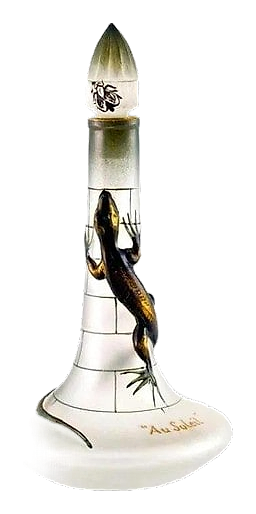
Au Soleil arrived in 1909 from Lubin, a perfume house with deep roots and a long record of composition. The name translates simply: in the sun. There's no elaborate backstory, no allegorical muse described in period advertising, and Au Soleil doesn't seem to need one. What it offers is something rarer than mythology: a feeling, bottled and offered without explanation. The feeling here is uncomplicated. The hour before dusk, the terrace, the kind of warmth that doesn't demand anything of you. It's a sun portrait, not a shadow study. What makes the name work is its plainness, the way it refuses to overstate. In the hand, the bottle feels like an artifact from a quieter century, the kind of object that doesn't announce itself on a vanity. The juice inside lives up to that restraint.
What's interesting about Au Soleil is its restraint. The structure stays bright and powdery throughout, a choice that makes it feel closer to a late-afternoon mood than a midnight one. The florals do the emotional lifting without leaning into narcotic territory. Nothing gets sticky. Nothing overstays. That discipline, keeping warmth without weight, is the composition's quiet signature. It's a fragrance that understands the difference between presence and intrusion, and it commits fully to the former. Where many compositions of its era reached for opulence, Au Soleil chose clarity.
The evolution
The opening is where Au Soleil announces itself, and it announces softly. A bright lift that reads clean and gentle against skin, the kind of freshness that doesn't demand attention. Within fifteen minutes, that brightness folds into the heart, a generous floral arrangement that leans powdery and soft rather than heady. The florals never crowd the wearer, never cross into overwhelming territory. They behave more like warm air than a bouquet. As hours pass, the base materializes: a quiet, ambery warmth that stays intimate, close to skin, more suggestion than statement. The drydown is the best part, actually. By hour four or five, Au Soleil has become a warm, slightly sweet skin scent with a faint floral ghost. It doesn't project much by then, but what it does project feels personal. The next morning, on clothes, a trace of soft powder remains. Not loud.
Cultural impact
Au Soleil holds a particular kind of appeal that doesn't depend on novelty or shock value. It's a warm, sunlit floral that never went heavy or dark, and that choice gives it a staying power that newer compositions often struggle to match. The scent carries a kind of optimism without sentimentality, a belief that warmth and clarity can coexist on skin. There's something quietly radical about a floral that refuses to seduce through weight or darkness, that instead offers brightness as its central gift.