The Story
Why it exists.
The beginning
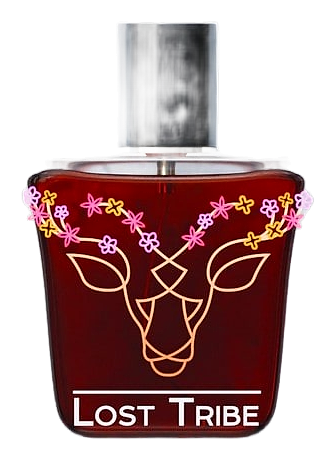
Trick or Treat arrived from Lost Tribe in 2023, composed by Mathew Schmuelian, and it wears its holiday inspiration openly. The official description reads almost like a memory journal: coming home from a night out, face buried in a plastic pumpkin bucket stuffed with candy. The reference is specific, almost intimate, and the perfumer's choice to anchor the opening in labdanum, jasmine sambac, and ylang-ylang suggests a sweetness designed to recall red licorice, spun sugar, and that sticky-fingered hour of sorting through the night's haul by lamplight. There's a deliberate layering at work here, with each note stacked on top of the last to build that single sensation of a Halloween haul rather than a broad interpretation of autumn.
What makes this composition worth attention isn't the sweetness itself. It's how the honey-candy opening gets dragged through a serious woody base. Labdanum doing the heavy lifting in the top notes is unusual for a gourmand-leaning scent. Labdanum is an amber resin, sticky and slightly animalic, and it gives the candy opening a leathery, almost medicinal undertone that keeps the whole thing from drifting into confectionery territory.
The evolution
The opening is loud. Within the first few minutes, labdanum and the two indolic florals throw sweetness at the wearer like something poured too fast. Ylang-ylang sharpens the edge, giving the honey a cold, almost mentholated lift that one wearer compared to risengrød, with a citrusy brightness cutting through the denser sweetness. For about the first hour, this reads as a strong floral-amber, dense, sweet, and slightly unnerving in the best way. Past that opening window, the white ginger lily and red frangipani take over. The heart is where the composition starts to breathe like a real ambient space rather than a perfume. French oak wood shows up here and reads as something you don't expect: a warm, almost bourbon-vanilla note, like the bottom of a whiskey glass that's been sitting out.
Cultural impact
Trick or Treat was released in a numbered run of just 15 bottles, placing it firmly in limited-supply territory. That scarcity has shaped how people talk about it, since the conversation around the fragrance tends to circle back to the oud-honey collision at its core. This sits outside the usual Halloween-candle lane and tends to attract attention for that reason alone. Discussions about the fragrance often return to the same observation: that the perfumer made a candy-inspired concept and refused to keep it simple.