The Story
Why it exists.
The beginning
Lorenzo Villoresi opened his Florence atelier in 1990, expanding from candles into full perfume. Garofano arrived in 1995 as one of his earliest fragrances, and one of his most personal. In Italian, Garofano means carnation, and that name tells you everything about Villoresi's intent. This was built as a quiet, single-molecule study: a commitment to one of perfumery's most distinct and polarizing materials. At 44, Villoresi had found his niche in a market still dominated by mass-market florals and aldehydic classics.
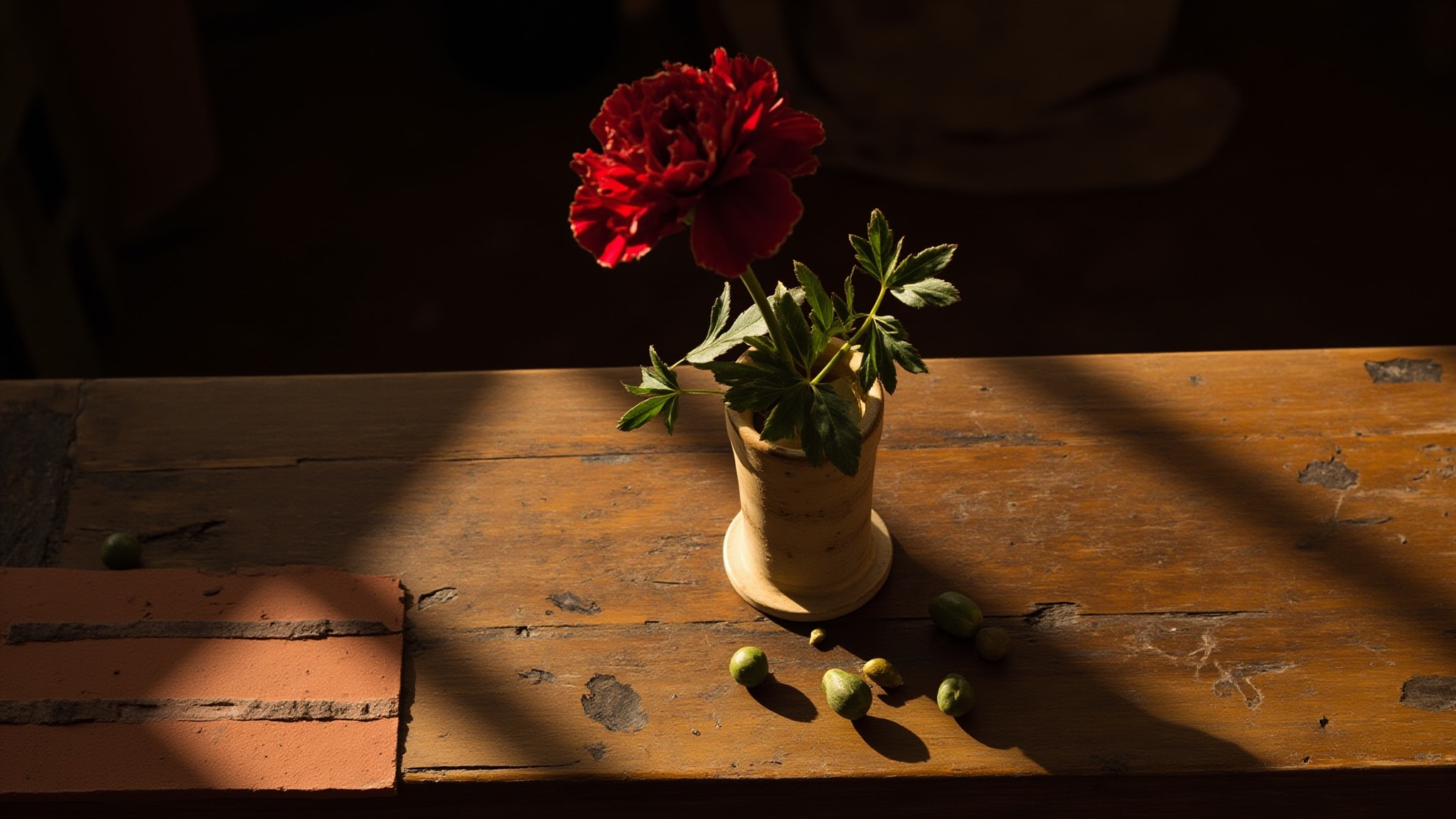
Villoresi's approach here treats carnation not as a supporting player but as the protagonist. The opening's green herbs and lavender were chosen to frame that carnation cleanly, preventing it from overwhelming before it opens. Geranium and rose support that natural garden quality, while black pepper and cinnamon create the warmth and bite that makes carnation so distinctive. The drydown's vanilla and heliotrope offer the powdery sweetness that balances carnation's clove-like spice. These pairings reflect Villoresi's philosophy of letting a core material dictate its own structure rather than forcing harmony for its own sake.
The evolution
The scent journey begins with green herbs and lavender cutting through cleanly. Within minutes, carnation asserts itself as the heart's anchor, joined by geranium for a garden-like naturalism and rose to soften the spice. Black pepper and cinnamon emerge to provide warmth, while jasmine and ylang-ylang deliver fullness to the mid-range. Cyclamen contributes a subtle bitter edge that prevents the heart from becoming too sweet. As hours pass, the spice and carnation slowly recede into musk, heliotrope, and cedarwood. The drydown is where Villoresi's craft shows most clearly: that same carnation warmth persists under vanilla's sweetness and cedarwood's woody embrace.
Cultural impact
Garofano has lived quietly since 1995, finding its audience among those who appreciate florals with a backbone. The carnation focus makes it unusual, it sits outside the rose-and-oud mainstream. Among Lorenzo Villoresi's early works, it remains one of the most distinctive, a reference point for warm, spicy florals that don't explain themselves.