
The Story
Why it exists.
The beginning
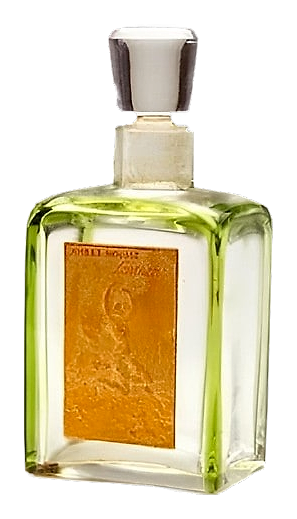
Le Matin au Bois, released in 1927 by Lentheric, has a name that suggests a quiet, wooded setting. The composition leans heavily on green notes that give it a forest-like character, with the woods taking center stage rather than serving as a backdrop. It reads as a quieter expression of a green-floral aesthetic, a composition that keeps its voice low and measured. The scent has a hushed quality, more atmospheric than ornamental, inviting the wearer into a space of stillness. Where many compositions of the era shouted, this one whispered, letting the green notes carry the structure while florals added only texture. That restraint gives the scent a contemplative feel, one that rewards close attention rather than demanding it from across a room.
What makes this composition worth noting is its restraint. Le Matin au Bois does not lean on overt florals. The green of the forest carries the structure, with florals used as texture rather than declaration. The greens lead, the florals follow, and the resulting profile feels more like a landscape than a portrait. The woods read as the dominant thread throughout, with a damp, resinous quality that grounds the composition and keeps it from floating away into pure sweetness. There is a coolness here, a suggestion of shade rather than sunlight, and that temperature choice shapes everything else.
The evolution
The first ten minutes feel like stepping outside before the dew has lifted. The opening reads sharp and green, almost medicinal, the resinous edge of evergreen bark warmed slightly by something softer underneath. A cool, damp green quality arrives almost immediately, the kind of green that clings to stones and fallen branches. By the thirty-minute mark, the composition shifts register. The greens recede just enough to let a floral thread through, a powdery softness that suggests petals rather than a bouquet. The florals never take over. They sit inside the green rather than on top of it, creating the sense of walking deeper into the woods where the air is still cool but the light has changed. Two hours in, the base asserts itself.
Cultural impact
Le Matin au Bois arrived in 1927, into a Paris fragrance scene that was already rich with green and floral compositions. The scent offered something distinctive by pushing the woods to the front of the arrangement rather than tucking them behind a floral lead. That structural choice, greens as architecture rather than accent, gave it a character that set it apart from many of its contemporaries. The composition has the feel of a piece that was content to exist on its own terms, neither chasing trends nor refusing them outright.