The Story
Why it exists.
The beginning
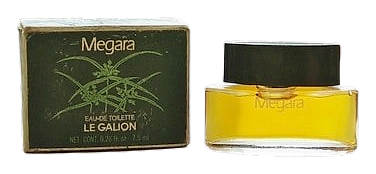
Megara arrived in 1978, composed by Dominique de Urresti for Le Galion. The name suggests something classical, a Greek city, perhaps, or a woman from mythology. Whatever the intent, the fragrance itself is unmistakably French: structured, assured, with the kind of restraint that takes confidence to execute. It was one of the final releases before the house's quiet years, a kind of last statement before the curtain fell. And what a statement. The aldehydic opening signals immediately that this isn't a typical fragrance. Instead, Megara opens cool and green and holds its cards close. The aldehydes hit first, cold and crystalline, almost electric in their precision. They don't linger though. They introduce, then step back, leaving space for the green notes to unfurl.
What makes Megara distinctive is its handling of the aldehydic form. Hyacinth shares the opening stage with the aldehydes, giving the top a distinctly green character rather than a soapy or waxy one. The heart adds complexity through orchid and orris root, materials that hover between floral and powdery, creating an almost violet-like sweetness without resorting to actual violet. Honey threads through the gardenia and jasmine, adding warmth that keeps the composition from reading as cold.
The evolution
The opening is immediate: aldehydes and hyacinth arriving together, green cutting through the sparkle. Bergamot sits underneath, barely noticeable, just a suggestion of citrus coolness. The aldehydes don't dominate, they introduce, then cede the stage. Within fifteen minutes, jasmine and gardenia push forward. The gardenia is creamy and tropical; the jasmine is indolic in the best way, giving the heart a slightly animalic undertone that earns its place in the composition. Lily of the valley adds a clean, green note that keeps the florals from feeling heavy. Rose arrives quietly, joining rather than overwhelming. By the second hour, the honey becomes more apparent, a warm sweetness threading through the white florals. The orchid and orris root create a powdery, almost violet-like haze in the background. Then the drydown takes over. Oakmoss anchors everything, earthy and mossy and distinctly vintage in character. Cedar and sandalwood smooth out the base, adding warmth and wood. The ambergris is subtle, a salt-animalic whisper rather than a shout.
Cultural impact
Megara appeared at the tail end of Le Galion's first chapter, released in 1978 before the house's quiet years. It holds a quiet reputation among those who know vintage French perfumery as an unheralded gem. The fragrance offers a classical green chypre character that stands apart from the more overt floral releases of its era, appealing to collectors who value subtlety and complexity over straightforward florals. Its revival by Nicholas Chabot in 2014 brought it back into circulation for a new generation of collectors seeking that specific French restraint that defined an earlier chapter of perfumery.