The Story
Why it exists.
The beginning
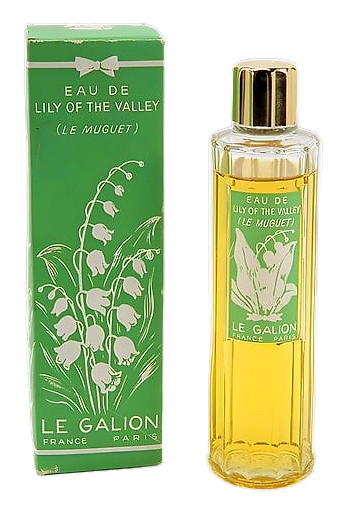
Paul Vacher built this composition in 1950, at a time when Le Galion was already fluent in the language of Parisian florals. The challenge at the heart of any lily of the valley composition lies in the flower itself: small, white, and deceptively simple, muguet carries a sweetness that can overwhelm a formula if it isn't held in tension with cooler elements. Vacher approached the brief with the precision of a perfumer who understood that the flower's character depends entirely on what surrounds it. The aldehydes here do the structural work, lifting the composition with a bright, almost metallic crispness that keeps the sweetness from settling into anything syrupy. Green leaves provide the vegetative bite, the stem-and-foliage quality that makes muguet smell alive rather than candied.
What defines this composition is the way its three pillars hold each other in balance. The aldehydes introduce a cool, waxy clarity at the top, sharp enough to read almost metallic against the warmth of skin. The green leaves temper that brightness with something vegetal, slightly bitter, the sensation of stems being crushed between fingers rather than blossoms floating in a bowl. The muguet at the center never loses its grounded, dewy quality, kept honest by the cooler notes around it. As the hours pass, the composition narrows rather than expanding.
The evolution
The opening belongs to the aldehydes, a bright, almost waxy lift that reads cold against the skin. It feels sharp, almost soapy in the best possible way. Then the green leaves arrive, bringing stemmy, slightly bitter freshness that pushes the aldehydes back rather than complementing them. This is where the composition finds its rhythm, cool on cool, neither warmth nor sweetness breaking through. By the second hour, the muguet begins to dominate, but it never fully surrenders its green edges. The florals settle into a dewy, almost translucent register, the white-petaled sweetness held taut by the sharper notes that came before. There is a moment around the ninety-minute mark where the composition seems to inhale, everything momentarily thinner and more transparent, before the sandalwood begins to gather beneath it.
Cultural impact
Le Galion's Lily of the Valley holds a quiet place among the muguet-dominant florals of mid-century French perfumery. Composed in 1950 by Paul Vacher, the fragrance entered a field already shaped by longstanding traditions of floral composition, and it earned recognition among those who pay close attention to the period's more restrained offerings. The formulation is apparently discontinued, which has shaped how the fragrance circulates today. Surviving bottles tend to move quietly through the vintage market, sought after by enthusiasts who track down discontinued compositions rather than seeking out current releases.