
The Story
Why it exists.
The beginning
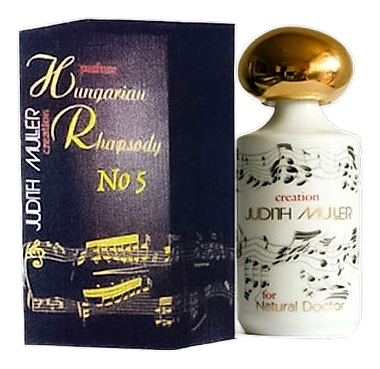
Hungarian Rhapsody No. 5 arrived in 2005. By then Judith Muller had already built a portfolio of fragrances named for biblical figures and ancient places, Bat-Sheba, King David, Sharon. This composition looks backward instead. The name references her homeland, Hungary, and the musical tradition most associated with it, Liszt's Rhapsodies. It is, in a sense, a homecoming. Pierre Bourdon, the nose credited here, brings a chypre-floral vocabulary, and the result is something distinctly Central European. A white floral with green edges, dressed in myrrh. The opening is sharp and vegetal, a cut stem of geranium leaf and a scatter of green pepper that snaps awake on the skin before the florals even gather themselves.
What makes this composition worth attention is the contrast at the top. Green bell pepper is not a common opening in feminine florals, it reads almost vegetable at first, with a cool bitterness that grounds what follows. That jolt is what keeps lilac and rose from drifting into the powdery or grandmotherly territory the combination can fall into. Myrrh in the base is the slow-burn element: balsamic and resinous, it thickens the floral heart into something that feels architectural rather than decorative.
The evolution
The first fifteen minutes are the greenest the fragrance will ever be. Bell pepper hits sharp, almost like snapping a stem, and for a few minutes the composition reads as an herbaceous green floral rather than anything warmer. Then lilac arrives and the temperature shifts, carrying rose and lily with it, and what was crisp turns creamy. Jasmine threads through underneath, indolic but restrained, adding the faint suggestion of skin without going animalic. The heart holds for two to three hours, a full-bodied white floral with enough weight from the developing myrrh to feel grounded. By hour four the pepper is a memory, the jasmine has faded, and what's left is rose over myrrh and ambergris, balsamic and a little powdery at the edges. The sillage pulls in by this point: the fragrance becomes a close aura rather than anything that announces itself. On clothes the next morning, the myrrh is the last thing standing, sweet-resinous, almost like the ghost of a candle that burned down hours ago.
Cultural impact
Hungarian Rhapsody No. 5 occupies a small, specific corner of the fragrance world, a 2005 release from a house whose name evokes both the Old Testament and the Hungarian plains. It is the kind of piece collectors stumble across and hold onto: still in production, but personal enough to feel like a discovery rather than a statement. The bottle sits quietly on shelves, unassuming, and the scent inside rewards a second and third wearing far more than a casual sniff from a blotter. Wearers gravitate to it for the green pepper opening that breaks the white-floral mold without breaking the composition's elegance.