The Story
Why it exists.
The beginning
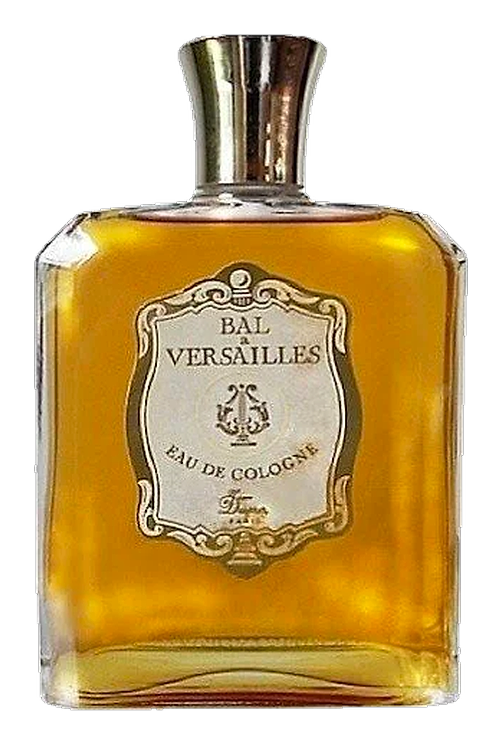
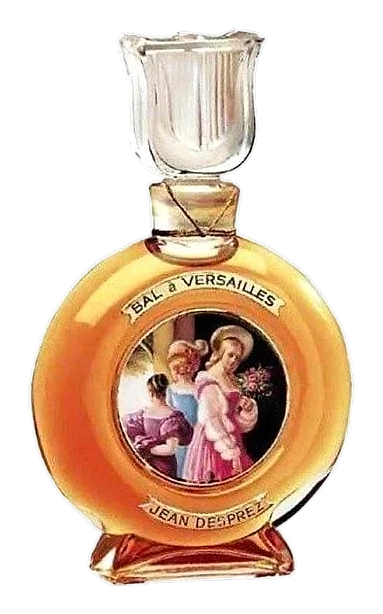
Bal à Versailles arrived in 1962 from Jean Desprez, a French house that had been operating from Paris since 1928. The fragrance draws its name from the imagery of a grand French ball, and its opening announces the theme immediately with bergamot, lemon, and a green flash of rosemary and basil lifted by mandarin and a trace of neroli. Within minutes the citrus brightness folds back to let a dense floral heart unfold, one built around rose, jasmine, lily of the valley, orris root, ylang ylang, and a generous measure of carnation that gives the composition its slightly spicy, almost clove-like warmth. The heart is unmistakably opulent in feel, with the orris contributing that cool, cosmetic softness that reads like face powder on warm skin.
What makes this composition unusual is its willingness to keep civet at the heart of the drydown. Bal à Versailles lets civet stay audible, giving the powder a skin-like pulse that reads intimate rather than decorative. The orris root adds a cosmetic softness, sandalwood and patchouli give the base its architecture, and tolu balsam plus benzoin supply the resinous warmth that earns the oriental label. Nine top notes, seven heart notes, and eight base notes make this a densely built composition by any standard.
The evolution
The first thirty minutes belong to citrus. Bergamot, lemon, mandarin, and neroli brighten the opening while rosemary adds a clean herbal edge and cassia brings a faint spice. Jasmine and rose arrive underneath, pushing the florals forward before the powder notes settle in. By the one-hour mark, orris root dominates the composition. Lily of the valley and ylang-ylang keep the florals alive, but the cosmetic, soapy character of orris takes over, softened by sandalwood and grounded by patchouli and vetiver. Lilac adds a green sweetness that keeps the heart from going too dense. The drydown shifts register entirely. Civet surfaces with its warm, musky fur note, joined by tolu balsam and benzoin for a resinous sweetness. Amber and cedarwood build the architecture while vanilla rounds out the base. The civet stays audible through the final hours, which is unusual for a composition this old. On fabric the next morning, the residual scent reads as warm amber and soft musk, the powder almost entirely dissolved into skin-like warmth.
Cultural impact
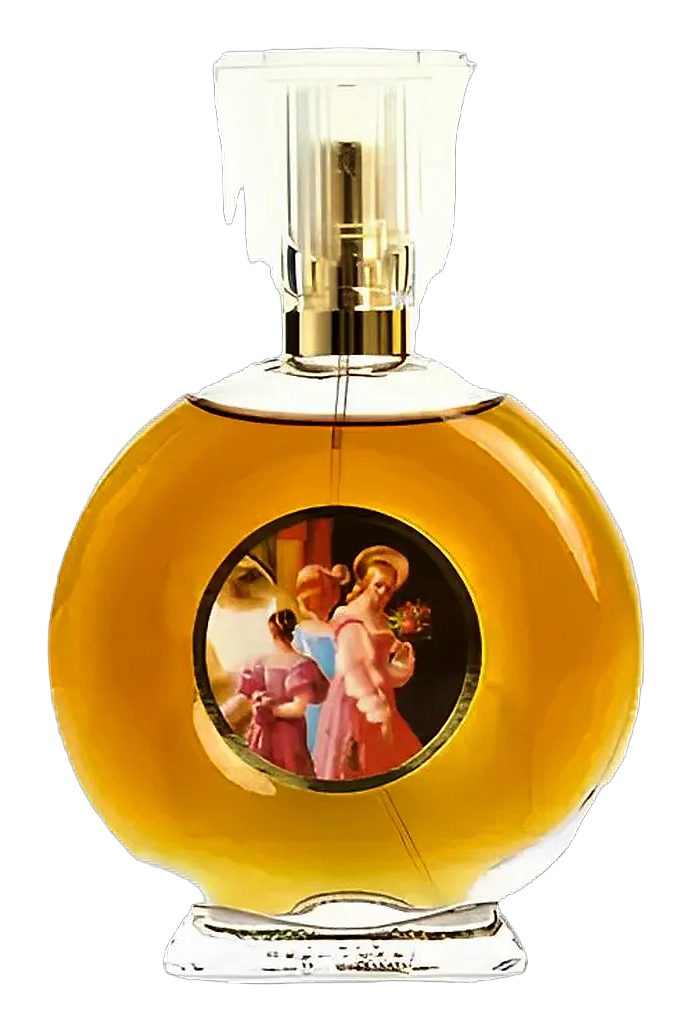
Bal à Versailles holds a particular place in the conversation around animalic powder fragrances, and its longevity speaks to the loyalty of its wearers over decades. The composition remains a touchstone for anyone drawn to orientals that don't shy away from civet at their center, and the way it balances that animalic note with orris, sandalwood, patchouli, and balsamic resins gives it a recognizable signature that distinguishes it from softer, sweeter orientals. Its bottle design by Pierre Dinand has become iconic in its own right, frequently appearing alongside the juice in collector discussions and vintage perfume photography.